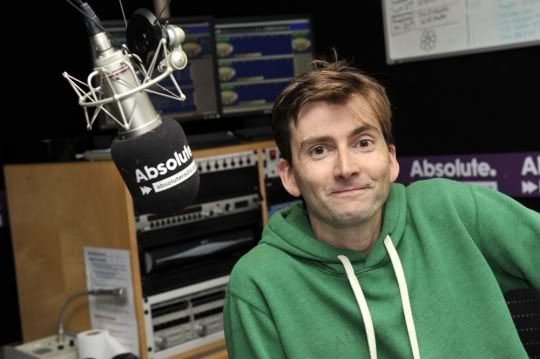
After four years in the Tardis, David Tennant finally leaves Doctor Who after a spectacular two-part adventure to be shown on BBC1 over Christmas and the New Year. Here he tells What's On TV what to expect - how the Time Lord battles the Master, meets Donna Noble again, and regenerates into Matt Smith...
What can you tell us about your final two-part adventure called The End of Time?
“Well it’s my finale and it definitely won’t disappoint. It’s just huge and the cliffhanger between the two episodes amazingly keeps going on and on. It’s brilliant in its scope because you keep thinking, that’s the cliffhanger and then something else happens, then something else and you think well that’s it it’s finished – and then something brilliant you never see coming happens. It’s great to have some returning stars back too. John Simm is The Master, Catherine Tate is Donna again, and Bernard Cribbens is her grandfather Wilf.”
Is Donna quite central to the story?
“Well Donna was last seen at the end of series four when she was made not to remember any of her adventures with the Doctor. We were told all hell would break loose if she did remember. So when the Doctor bumps into her grandfather Wilf again it’s clearly imperative that they don’t bump into Donna, or that Donna isn’t aware of what’s going on. I think it’s fair to say that Russell T Davies wouldn’t write that into a script unless it’s seen through. You can probably imagine the chaos that’s going to happen there.”
There are some Ood as well, aren’t there?
“Yep you see one at end of Waters Of Mars. In this we get to visit the Oodsphere again where the Doctor’s told ‘Your song will be ending soon’. The Ood are actually calling time on the Doctor and for him that’s where the story begins. But we find out that he hasn’t gone straight there and he’s running and trying to pretend his incarnation isn’t doomed. But the Ood tell him he should have got there sooner because time is moving against him and the rest of creation in the shape of The Master who has miraculously been brought back to life. The story iunravels from there pretty much.”
So do you meet the Master early on?
“Not too early on as there’s a bit of hide-and-seek going on between the Doctor and The Master. Unlike the last time you saw The Master when he was the Prime Minister Harold Saxon, he’s in a slightly more feral state this time. He’s hiding not only from the Doctor but from humanity at large. And the process of bringing him back to life hasn’t left him the healthiest creature in the world. There’s also a desperateness to him this time. He wasn’t the most sane of characters at the best of times but John Simm is just sensational - he kind of just eats the screen up with a feverish intensity, it’s extraordinary. And the Doctor knows he’s dying so needs to find the Master. The Doctor’s relationship with The Master is confusing because he knows he has to sort of shut him down. At the same time he wants to reach out to him because he’s the only vestige of the Time Lord’s people that’s left. There’s that kind of Bond there.”
What are the exchanges like between you and The Master?
“There’s lots of dialogue between them, and John Simm’s brilliant. John really enjoys the part as well. He gets to go barking mad which he did the last time and you thought that was as bad as it got, but this time he’s off the scale! He also gets to blow things up which he enjoyed. There are a lot of fireballs going off at various points. When things start to explode behind you it’s tricky to look cool. Everyone’s trying to crank it up for the finale and make everything that little bit bigger than before. I remember the heat on the back of my head was incredible at one point. But then you look back and realise how cool it looks when you see the scene!”
The Doctor spends a lot of time with Wilf doesn’t he?
“You get these incredible scenes with these two old men – Wilf who’s 80 and the Doctor who’s 906 or so and it’s incredibly moving to see these old boys talking about life and death. He’s as much the Doctor’s companion in this as anyone is. He gets on board the Tardis and has a trip with the Doctor, which is fantastic because Bernard Cribbens last did that in 1966 with Peter Cushing in the movie. Daleks: Invasion Earth 2150AD.”
Are these dark, scary episodes?
“It’s got a different scale to it. It’s kind of like a fable, with fairytale elements. It starts with this narration from Timothy Dalton in this booming voice. He says something like: ‘In the last days of the human race everyone was having bad dreams’ and it’s got that kind of epic scale to it and every ten minutes or so Timothy comes in with a bit more spooky narration. There’s a huge long sequence where nobody says anything and the Doctor and the Master are simply trying to find each other. It’s different from anything we’ve done before. Russell’s so clever and knows exactly how you can kind of tease these things out and just when you think it’s getting a little bleak he sprinkles in a little bit of comedy. It’s a beautifully constructed story.”
What’s June Whitfield’s role in the story?
“She plays Minnie the menace, who had an incident in a police box once – not the Tardis another police box - and she likes to remember that when the Tardis comes along. She’s one of Wilf’s pals and she’s in it right throughout actually.”
Are John Barrowman and Billie Piper back as Captain Jack and Rose?
“They’re not in the Christmas episode. New Year? – you’ll have to wait and see...”
We’ve heard there are some weddings, is that right?
"Yep Donna’s getting married. In fact that’s when The Doctor meets Donna again, he also meets her husband-to-be and they’re all set to get married. But clearly that’s not going to work out. Well certainly not as smoothly as she might anticipate."
Was it strange being in the Tardis for the last time?
“That actually came in the Sarah Jane Adventures which I filmed after. In a way that was a nice decompression week which I think was probably for the best. I think if my last day had been my last Doctor Who scene I’d have been a wreck, so as it was I was spared all that.”
Is the Doctor obviously heading towards regeneration throughout this?
“Well I think he knows he is in trouble from the end of The Waters Of Mars. He realises he went too far there and the universe is catching up with him and the Ood have come to call him to his fate. He says quite early on in the Christmas Day episode 'I’m going to die'. He knows it’s coming, he feels it coming and there’s something broken about him. At the beginning of the story you see him trying to cope with that knowledge in a bizarre fashion like wearing a silly hat and talking nine to the dozen to the Ood trying to make it all OK. But he knows he’s running from the inevitable. These episodes seem bigger and scarier and the whole scale of it is kind of imposing, because it feels like there’s a drive towards his end that is inescapable for everyone involved.”
Do you run about a lot in this adventure?
“There’s not as much running as normal which is fair enough because Bernard Cribbens is 80, and we wouldn’t want to kill him off. Although saying that, he’s pretty good, he did keep up. He’d never give up he was so fearless. I’m strapped down for one sequence so had to be wheeled about. There were lots of big stunts and lots of things blown up behind, and a bit of wire work, too. I don’t think I got body-doubled in this. I was allowed to do everything.”
Why did you pick now as the time to leave Doctor Who?
“It was less about fear of being typecast, than if I stayed I’d never have the guts to leave because I love it so much. It would have been very easy just to keep going. It’s felt a very special and unique time, not just a job. I’d hate it to become just that. So this felt like the brave thing to do. If I’d stayed much longer you’d have never got rid of me.”
Did you give any advice to Matt Smith about taking over from you as the Doctor?
“I haven’t given him any advice. What would you say really? It would be patronising and inappropriate. We’ve chatted of course and he’s got such enthusiasm and focus for it. But I wouldn’t presume to tell him what to do. I’m quite jealous in that I recognise that he’s starting out on a journey that will be amazing. It’s exciting and overwhelming. It’s funny, on the day Matt started shooting, there were photos released. I hadn’t expected it. It was up on the internet so I went and had a look. I was genuinely surprised and excited. That doesn’t mean when it comes on telly I won’t be going, ‘Oh he’s better than me!’. At the moment I’m just really excited to see what they do next.”
Doctor Who has been a huge chunk of your life hasn’t it?
“Absolutely and a very special time. I’ll always look back on this time very fondly. Life changing yeah, and unique, it will be unlike anything else I’ll ever do. With the appeal it has and the range of attentions it gets it’s pretty unique.”
Have you taken any mementoes?
“I haven’t taken anything from the set though I got given a sonic screwdriver. And I got given some versions of the costume, then panicked and had to put them somewhere else because I thought what if my house gets robbed or burns down. I can go visit them I suppose.”
Did you have any fears about this being your last hurrah?
“Clearly you want your last one to be big and special and feel epic. And feel like an end to something. But as soon as I read the script I knew that was going to happen. Russell T Davies has managed to create a story quite unlike what we’ve done before. I just wonder how he keeps managing to re-invent things. But he does it and my admiration for him grows and grows.”
Is there anything you won’t miss about being Doctor Who?
“Not really. There are two sides to Doctor Who and I never anticipated being a celebrity – it’s not something that sits very easily with me. So there are sides to that I won’t be sorry to see the end of. So if some of that died down a bit that would be ok.”
Will you be sitting down watching on Christmas Day and New Year’s Day?
“Yes along with the millions of others – I gotta keep the viewing figures up. My family enjoy watching it with me - they enjoy the hoo-ha of it. There’s undeniably something special about being a part of something like a TV event. People talk about the Doctor Who Christmas special being like the Morecambe and Wise Christmas specials. But we’ve only done four and it’s a relatively new thing. My first episode was the very first Doctor Who Christmas special they’d ever done. I feel very chuffed that we’ve become part of the Christmas furniture and the family, like me, enjoy that sensation.”
Doctor Who: The End Of Time parts 1 and 2 will be shown on BBC1 at 6pm Christmas Day and 6.40pm on New Year’s Day.
Tuesday, December 15, 2009


Russell T Davies on writing
The writer best known for his unique take on "Doctor Who" thinks it's a fate-driven partnership. "It's literally the first thing I remember from when I was 3 years old," says the jovial Russell T Davies in a quiet tea room in a hotel here.
"I was born in 1963 so I can remember black-and-white images of 'Doctor Who' from that age. My mother used to sit and make me watch it, she loved it so. The whole of Britain watched 'Doctor Who.' Now it does again, fortunately. In those days every child watched it. There was just no question, no debate. It was a show that everyone watched so a lot of people grew up and became teenagers. I just stayed with it."
Davies, who's been writing the series for six years, is parting ways with his flashy hero. "I've loved it but it's time to move on. I wanted to get out while I still loved it before I got bored. I'm excited. I feel like I made the right decision and it's an achievement It's been the No.1 program in Britain. Not the No.1 drama - the No. 1 program."
The last two of his episodes, "The End of Time," air Dec. 26 and Jan. 2 on BBC America.
As fond as he is of the character, writing is another matter. "It's hard work," he shakes his head, "it's never enjoyable ... I like the end of it when something's made and I'm happy with it and I watch it. And I've watched things I've made many times, mostly because I can't believe the luck and the relief having gotten to the end of it. I'm building up to writing a script right now, and I'm not liking this process. It's nights of worry and torment. However, it's better than being a nurse or a teacher in an inner city school," he sighs with relief. Writing is like putting your brain on paper, which is not natural and not easy but in the end, it's the joy of it when it works, when it clicks. Then something magic happens."
The magic didn't happen at first. Davies grew up in South Wales and never entertained the idea of being a writer. He was good at drawing and scribbled cartoons for school papers.
"It wasn't until I was in my 20s that I looked on it as a possible job never thinking it was possible (for me). Then fortunately I met the right people and worked very hard to get the right contacts and opportunities. It took a long time to realize it was even an option," he says. "I moved to Manchester and learned my trade there. Granada Television is based there which is a big, old television station dating back to the 1960s, a very prestigious company. I learned so much there. I just knocked on doors begging for jobs and writing things for nothing and standing in line and waiting - well everyone has to do that really. Eventually somebody I knew moved there and they gave me a job. So it's always the way, it's always the people you know."
He started writing what he calls "properly" in 1981 and has been employed ever since. "The problem with the job is it teaches you nothing because every new script is a new set of characters, a new situation, a new story - a whole new world and every time you start from scratch," he says. "All the experience you've built up is just worthless. You might learn the odd trick along the way, but if it's a trick, it's no good. You shouldn't use tricks. You should be more honest than that ... You know how much trouble people have at Christmas with a thank-you letter? You know how you put that off for days? That's what writing is, magnified by a thousand. It's writing that thank-you letter or that lengthy birthday card or that note to a friend you haven't spoken to in six months - times 6,000. It makes your brain melt."
His brain hasn't scorched too badly. Davies wrote "Queer as Folk," which became a television series in the United States, and seven months ago he moved to the U.S. to work on a new script. He actually started as a producer and director before he had the courage to try writing. It was part of the deal that he would be executive producer AND writer of "Doctor Who," though the requirements of each job differ.
"Writers are people who sit in the attic and wear pajamas all day, genuinely eccentric souls who lock themselves away. You can't imagine Proust running 'The West Wing,' can you?" he laughs. But he does both, harboring a deep appreciation for actors, calling them "magical people" and managing the gritty details of mounting a TV show. Part of his stability he owes to his private life and his 11-year relationship with his companion, Andrew White. "He's a customs officer," Davies chuckles, "which is a great antidote to my life. He doesn't care about show business or actors or anything like that and I go home and I barely talk about work. He has to put up with a lot from my job - the hours and things like that. I don't really go on about it. We just have a laugh together. Bless him."
"I was born in 1963 so I can remember black-and-white images of 'Doctor Who' from that age. My mother used to sit and make me watch it, she loved it so. The whole of Britain watched 'Doctor Who.' Now it does again, fortunately. In those days every child watched it. There was just no question, no debate. It was a show that everyone watched so a lot of people grew up and became teenagers. I just stayed with it."
Davies, who's been writing the series for six years, is parting ways with his flashy hero. "I've loved it but it's time to move on. I wanted to get out while I still loved it before I got bored. I'm excited. I feel like I made the right decision and it's an achievement It's been the No.1 program in Britain. Not the No.1 drama - the No. 1 program."
The last two of his episodes, "The End of Time," air Dec. 26 and Jan. 2 on BBC America.
As fond as he is of the character, writing is another matter. "It's hard work," he shakes his head, "it's never enjoyable ... I like the end of it when something's made and I'm happy with it and I watch it. And I've watched things I've made many times, mostly because I can't believe the luck and the relief having gotten to the end of it. I'm building up to writing a script right now, and I'm not liking this process. It's nights of worry and torment. However, it's better than being a nurse or a teacher in an inner city school," he sighs with relief. Writing is like putting your brain on paper, which is not natural and not easy but in the end, it's the joy of it when it works, when it clicks. Then something magic happens."
The magic didn't happen at first. Davies grew up in South Wales and never entertained the idea of being a writer. He was good at drawing and scribbled cartoons for school papers.
"It wasn't until I was in my 20s that I looked on it as a possible job never thinking it was possible (for me). Then fortunately I met the right people and worked very hard to get the right contacts and opportunities. It took a long time to realize it was even an option," he says. "I moved to Manchester and learned my trade there. Granada Television is based there which is a big, old television station dating back to the 1960s, a very prestigious company. I learned so much there. I just knocked on doors begging for jobs and writing things for nothing and standing in line and waiting - well everyone has to do that really. Eventually somebody I knew moved there and they gave me a job. So it's always the way, it's always the people you know."
He started writing what he calls "properly" in 1981 and has been employed ever since. "The problem with the job is it teaches you nothing because every new script is a new set of characters, a new situation, a new story - a whole new world and every time you start from scratch," he says. "All the experience you've built up is just worthless. You might learn the odd trick along the way, but if it's a trick, it's no good. You shouldn't use tricks. You should be more honest than that ... You know how much trouble people have at Christmas with a thank-you letter? You know how you put that off for days? That's what writing is, magnified by a thousand. It's writing that thank-you letter or that lengthy birthday card or that note to a friend you haven't spoken to in six months - times 6,000. It makes your brain melt."
His brain hasn't scorched too badly. Davies wrote "Queer as Folk," which became a television series in the United States, and seven months ago he moved to the U.S. to work on a new script. He actually started as a producer and director before he had the courage to try writing. It was part of the deal that he would be executive producer AND writer of "Doctor Who," though the requirements of each job differ.
"Writers are people who sit in the attic and wear pajamas all day, genuinely eccentric souls who lock themselves away. You can't imagine Proust running 'The West Wing,' can you?" he laughs. But he does both, harboring a deep appreciation for actors, calling them "magical people" and managing the gritty details of mounting a TV show. Part of his stability he owes to his private life and his 11-year relationship with his companion, Andrew White. "He's a customs officer," Davies chuckles, "which is a great antidote to my life. He doesn't care about show business or actors or anything like that and I go home and I barely talk about work. He has to put up with a lot from my job - the hours and things like that. I don't really go on about it. We just have a laugh together. Bless him."
Colin Baker Interview
It’s not often that one has the pleasure of being sat opposite The Doctor – as in, the definite article and not some overworked NHS chap. Earlier this year we met the sixth incarnation of the legendary Time Lord during a recording session for Big Finish’s noble endeavour to finally put those stories from Doctor Who’s ‘lost’ 23rd season into production as a series of audio adventures. Here’s the affable Colin Baker’s thoughts on the new project, his take on the 1985 cancellation and the current intense media scrutiny of the show.
Is it bittersweet for you to finally record the missing season on audio, given that they were abruptly pulled from production in 1985?
"Obviously it would have been great to have done them. I do remember reading the script of ‘The Nightmare Fair’ and looking forward to doing it. It’s quite interesting because since then my Doctor has developed, through the writers for Big Finish, in a lot of ways that I had in mind when I was doing it on television. The standard of writing that I’m getting now from Big Finish compares very favourably with some of the stuff I was doing on screen in the ,80s. I am playing these now not in the way I’d probably be expected to play them had it been my actual second season, where I would have been more dismissive of Peri and rude to her. I’m allowing The Doctor I am now to infect the way I play those scripts. It’s a kind of meld of the two really."
Has your stance towards the initial cancellation of Doctor Who in 1985 changed over the past two decades?
"I’ve mellowed quite quickly. I was a little unhappy that [script editor] Eric Saward took the opportunity to say he thought I should never have been cast in the first place, which given the fact that this was a guy I’d entertained in my home and never indicated to me how he felt - I thought it was a bit shabby. When people you think are your friends let you down that’s crappy, but Michael Grade wasn’t a friend of mine.
"Before he came to the BBC he was talking about not liking Doctor Who and thinking that it was a bit of tired old rubbish that ought to be cancelled. So it was perfectly acceptable when he came there that he cancelled it, and when he brought it back it was entirely his prerogative as head of BBC One to say that it was time to change the actor. I don’t actually think it was personal. At the time I thought ‘he doesn’t like me and thinks I’m a rubbish actor’. But with the benefit of information from third parties it’s quite clear that he just didn’t like the programme."
Have you noticed that there’s been a critical reappraisal towards your portrayal of The Doctor in recent times?
"I’m perfectly proud of the work I did, looking back at it. I know I’ve had a bit of a revision since my Big Finish stories came out. The most vociferous fans have decided perhaps I’m not a c**p actor and happened to be playing the part at a time when the programme was under attack. I’m sad because I’d have loved to have done it more, but I am doing it more now! I would happily go on doing these forever, as long as I sound the same, which at the moment I do. Maybe 20 years from now when I’m a doddery old fart I won’t. Way back when I started doing the part, I stated 'my ambition is to do it longer than Tom Baker', which of course was rather rudely truncated. But in terms of stories done, if you include Big Finish - and I do because they're Doctor Who stories - I've done more stories than Tom! It's even been suggested that I might be The Doctor who has done the most stories. I think I've edged Peter [Davison] and Sylv [Sylvester McCoy] on Big Finish stories."
Some of the other Doctors might try to redress the balance by claiming that 'The Trial Of A Time Lord' should count as just one story...
"Haha, there's got to be a jury out there to make this decision!"
Get Lynda Bellingham to decide...
"Haha, yeah!"
Having seen you in the studio recording Christopher Bidmead's 'The Hollows Of Time', it took me by surprise just how physical vocal acting can be.
"I find if I use physical effort it sounds like you’re using physical effort. When The Doctor is supposed to be walking, I walk on the spot. Bit pathetic really, isn’t it? You’re on your feet all day of course and I’m quite whacked by the end of it. Last night I was quite drained when I got home."
Did it mean much to you to feature in a brief clip shown on the last Christmas Special ‘The Next Doctor’ and watched by over 13 million viewers?
"I suppose it meant that ‘new Who’ has finally accepted there was an ‘old Who’. Obviously it was accepted off the record, but now it’s accepted on the record. Those brief flashes which will perplex, I suppose, the under 10s. ‘Who are those old gits in black and white up there?’ But it was quite nice. I think it excited fandom more than it did me, to be honest."
How do you feel about to the intense media interest in the show now, particularly when Matt Smith was unveiled as the next Doctor, compared to your time in the show?
"Yeah, that was bizarre. It was always newsworthy. When I was cast it was on the Six O’Clock News and my picture was up there as the new Doctor and I was interviewed by loads of people immediately afterwards. But this anticipation of announcing it nine months in advance, or however long it is, is unprecedented. The BBC now knows that it’s got a tiger by the tail and a tiger that is extremely healthy and charging forwards. For instance, I think I got one and a half Radio Times covers over my three years. I think during David Tennant’s era it’s been ten, twelve, fourteen covers?
"Doctor Who is big property now. It was then actually. In terms of overseas sales and its popularity, everywhere else except within the BBC back in the '80s, it was phenomenal. But the BBC wasn’t motivated back then to capitalise on that success. It is received wisdom that the programme wasn’t very successful in my era. But it was. We were getting eight or nine million. So I’m at a loss to understand that. It was almost as if they were embarrassed to be doing a programme that was 25 years old or whatever it was then. I think now that the BBC is a business – thank God – and as a business the merchandise they’ve got I’m sure earns more in revenue than sales of the programme.
"I’ve now got another little doll of me. What is most gratifying is that people keep saying to me ‘they’ve ran out of yours in my local shop, I can’t get the Sixth Doctor’. I think it’s just because it’s a pretty color and a bit more striking than the others. Now there’s a second doll of me in my Big Finish blue, which is lovely, as I always moaned about my costume. I think it’s lovely to get a new costume on audio!"
Doctor Who: 'The Nightmare Fair' is available to buy now at www.bigfinish.com with more stories to follow in 2010
Is it bittersweet for you to finally record the missing season on audio, given that they were abruptly pulled from production in 1985?
"Obviously it would have been great to have done them. I do remember reading the script of ‘The Nightmare Fair’ and looking forward to doing it. It’s quite interesting because since then my Doctor has developed, through the writers for Big Finish, in a lot of ways that I had in mind when I was doing it on television. The standard of writing that I’m getting now from Big Finish compares very favourably with some of the stuff I was doing on screen in the ,80s. I am playing these now not in the way I’d probably be expected to play them had it been my actual second season, where I would have been more dismissive of Peri and rude to her. I’m allowing The Doctor I am now to infect the way I play those scripts. It’s a kind of meld of the two really."
Has your stance towards the initial cancellation of Doctor Who in 1985 changed over the past two decades?
"I’ve mellowed quite quickly. I was a little unhappy that [script editor] Eric Saward took the opportunity to say he thought I should never have been cast in the first place, which given the fact that this was a guy I’d entertained in my home and never indicated to me how he felt - I thought it was a bit shabby. When people you think are your friends let you down that’s crappy, but Michael Grade wasn’t a friend of mine.
"Before he came to the BBC he was talking about not liking Doctor Who and thinking that it was a bit of tired old rubbish that ought to be cancelled. So it was perfectly acceptable when he came there that he cancelled it, and when he brought it back it was entirely his prerogative as head of BBC One to say that it was time to change the actor. I don’t actually think it was personal. At the time I thought ‘he doesn’t like me and thinks I’m a rubbish actor’. But with the benefit of information from third parties it’s quite clear that he just didn’t like the programme."
Have you noticed that there’s been a critical reappraisal towards your portrayal of The Doctor in recent times?
"I’m perfectly proud of the work I did, looking back at it. I know I’ve had a bit of a revision since my Big Finish stories came out. The most vociferous fans have decided perhaps I’m not a c**p actor and happened to be playing the part at a time when the programme was under attack. I’m sad because I’d have loved to have done it more, but I am doing it more now! I would happily go on doing these forever, as long as I sound the same, which at the moment I do. Maybe 20 years from now when I’m a doddery old fart I won’t. Way back when I started doing the part, I stated 'my ambition is to do it longer than Tom Baker', which of course was rather rudely truncated. But in terms of stories done, if you include Big Finish - and I do because they're Doctor Who stories - I've done more stories than Tom! It's even been suggested that I might be The Doctor who has done the most stories. I think I've edged Peter [Davison] and Sylv [Sylvester McCoy] on Big Finish stories."
Some of the other Doctors might try to redress the balance by claiming that 'The Trial Of A Time Lord' should count as just one story...
"Haha, there's got to be a jury out there to make this decision!"
Get Lynda Bellingham to decide...
"Haha, yeah!"
Having seen you in the studio recording Christopher Bidmead's 'The Hollows Of Time', it took me by surprise just how physical vocal acting can be.
"I find if I use physical effort it sounds like you’re using physical effort. When The Doctor is supposed to be walking, I walk on the spot. Bit pathetic really, isn’t it? You’re on your feet all day of course and I’m quite whacked by the end of it. Last night I was quite drained when I got home."
Did it mean much to you to feature in a brief clip shown on the last Christmas Special ‘The Next Doctor’ and watched by over 13 million viewers?
"I suppose it meant that ‘new Who’ has finally accepted there was an ‘old Who’. Obviously it was accepted off the record, but now it’s accepted on the record. Those brief flashes which will perplex, I suppose, the under 10s. ‘Who are those old gits in black and white up there?’ But it was quite nice. I think it excited fandom more than it did me, to be honest."
How do you feel about to the intense media interest in the show now, particularly when Matt Smith was unveiled as the next Doctor, compared to your time in the show?
"Yeah, that was bizarre. It was always newsworthy. When I was cast it was on the Six O’Clock News and my picture was up there as the new Doctor and I was interviewed by loads of people immediately afterwards. But this anticipation of announcing it nine months in advance, or however long it is, is unprecedented. The BBC now knows that it’s got a tiger by the tail and a tiger that is extremely healthy and charging forwards. For instance, I think I got one and a half Radio Times covers over my three years. I think during David Tennant’s era it’s been ten, twelve, fourteen covers?
"Doctor Who is big property now. It was then actually. In terms of overseas sales and its popularity, everywhere else except within the BBC back in the '80s, it was phenomenal. But the BBC wasn’t motivated back then to capitalise on that success. It is received wisdom that the programme wasn’t very successful in my era. But it was. We were getting eight or nine million. So I’m at a loss to understand that. It was almost as if they were embarrassed to be doing a programme that was 25 years old or whatever it was then. I think now that the BBC is a business – thank God – and as a business the merchandise they’ve got I’m sure earns more in revenue than sales of the programme.
"I’ve now got another little doll of me. What is most gratifying is that people keep saying to me ‘they’ve ran out of yours in my local shop, I can’t get the Sixth Doctor’. I think it’s just because it’s a pretty color and a bit more striking than the others. Now there’s a second doll of me in my Big Finish blue, which is lovely, as I always moaned about my costume. I think it’s lovely to get a new costume on audio!"
Doctor Who: 'The Nightmare Fair' is available to buy now at www.bigfinish.com with more stories to follow in 2010
Russell T Davies And The Lure Of America
Russell T Davies And The Lure Of America
So what are you up to in LA? Can you talk about it?
“I’m going to be slightly vague, just because of the nature of these things. It’s working for Worldwide, for Worldwide to become a studio out there. It’s payback time, I think. Worldwide and the BBC have supported us so well that it’s really in their interest then to get stuff into American studios. They’ve got a huge hit out there with Dancing With The Stars, which is Strictly Come Dancing. That’s just the start of their ambitions. They want dramas, they want everything. So I’m out there developing stuff for them with Julie and Jane Tranter. You know what it’s like with development, it can take five years to get something made…”
Are they dramas based on existing properties?
“I wouldn’t do that, but that’s part of the push. Everyone knows that Gavin And Stacey is being reformatted out there. In the papers the other day they mentioned Butterflies! And a fully Americanised version of Holby. But I wouldn’t be interested in reinventing a show like that. I like developing new stuff. It could be co-productions with the BBC. And also with money haemhorraging everywhere, it’s the future anyway, you pay half and we’ll pay half. Everyone gets budgets for half-price. So you get proper co-productions. But getting the BBC – not Worldwide – to liaise with an American studio is like VHS and Betamax! And I know who Betamax is… It’s really going to be interesting and fascinating. But if anyone’s in a position to do that it’s me and Jane and Julie because we know the BBC backwards. We know all its strengths and weaknesses, and we know Worldwide, because we’ve worked with them so often on Doctor Who. I’m not saying we’ll succeed, but we’ll have a good try. It’s just an adventure. It’s simply that Doctor Who is so massive and so brilliant and to be blunt, I could go and get a six-parter for ITV tomorrow, and I will one day, but that’s what I was doing before. I thought ‘Why go backwards?’ Why not take all the stuff you’ve learned on this show about marketing and branding - and actually there’s no other show in Britain to do that on, there simply isn’t, there’s nothing that big, and never will be. So simply a chance to do that. And then in a few years I will be dying to do a six-parter for ITV, and I will come back and do that. There’s no way I’m moving out there permanently. It’s too f**king hot!”
How do you find it personally? People always say that it’s a vacuum over there for British people creatively.
“No, it’s not. People are just snotty about it. Telly people are clever, telly people over there are dead sharp… I could talk about this forever. It’s fascinating to watch this stuff. It’s a completely different thing to watch it on transmission than it is to watch box sets. I love Flash Forward, it’s a great show, it’s going out at 10 o’clock on Five over here… last episode, lovely great big strong lesbian story in there, lovely upfront relationship. Fascinating, in America – that’s going out at 8 o’clock at night. If you ask people over here they say, ‘Oh, there are no gay stories over here,’ but there are masses of them, and they’re transmitted at 8 o’clock. We just survive culturally by imagining that we’re better than America in our oppression, and actually it’s so misconceived. I’m watching the cop shows and the crime shows, and I’m years from making any definite conclusions, and maybe any definite conclusions will be nonsense, but I can absolutely tell right now that at the top level, their best writing is no better than our best writing. But what is fascinating is that at the bottom level, their worst writing is far better than our worst writing. It’s more structured, it’s more clean, they know what they’re doing. So a piece of rubbish on American TV is much better made than a piece of rubbish on British TV.”
Do you think that’s due to the system? The writing room and all that?
“It’s not just the room. It’s simply that it’s a proper job out there. Writers in this country are still slightly embarrassed about saying ‘I’m a writer, it’s part-time, it’s a hobby…’ And even when they’re working very hard, Frank Cottrell-Boyce said this, the writers actually want to go home to the pub, and home to the attic. And in America they want to be on set making the show. It’s literally a different approach to it.It’s a more professional approach, a more real approach. It’s less mystical, and more hard work. And that’s a very American ethos, hard work. And of course it has its faults. I’m absolutely not saying that it’s a perfect system. I’ve discovered the faults in it as well as the strengths. But it’s amazing just to see how everything is designed to succeed. Which doesn’t mean that it does succeed – things could fall apart, and it’s always an imprecise science, but that’s not true of British programmes. A lot of them can apologetically slide on air with a bit of a shrug saying ‘Oh well, we tried’. And I love that hype. That stuff is expensive and it’s designed to be seen.”
The scythe falls very quickly, though.
“Yes, it does. I’m just getting used to that transmission pattern. Supernatural will have been on for five weeks and now it’s having a break! What? How stupid is that? And then you watch the other channel not having a break and stealing all their viewers! It amazes me. Let’s have a great night on ABC, let’s show Flash Forward on a Thursday night, Friday night – all repeated! Can you imagine that on BBC One? We’re showing Thursday night again! British telly would never do that. We’d have new programmes on. And yet, when you’re sitting there, you get used to it. You’re sitting there on the Thursday thinking, ‘Oh, I could watch it tomorrow!’ It’s amazing how quickly you get used to these different rhythms.
"One area in which I think our television is better is the horrific hour between 7 and 8, which is their entertainment shows, because it’s such a showbiz culture. There’s an hour of Entertainment Tonight and a ruthless, vicious showbiz show called The Insider, which is vile and yet vastly watchable. And you think, 'Actually, I’m glad we make Emmerdale in this country.' Because that’s actually a nobler pursuit than making these shows! But it’s fascinating to watch. It’s not as simple as transplanting that culture into our culture. People in this country always say, ‘Oh, you should bring the writer’s room over here…’ Well, you could never afford it, don’t even talk rubbish, it’s never going to happen. It does happen on certain sitcoms and they’re rubbish. When we do it over here we get students in to do it – I’m glad that they can do it on air, but it doesn’t raise the standard of writing at all. I had dinner with Jane Espenson, and they have misconceptions about American television as well. You’d be surprised at how many writers there are dying to come here. To them, to write six hours is a joy – no, we don’t have to do 22 hours, we can do really small, authored pieces.
"And it’s interesting, because someone like Jane Espenson, if she was British, by this stage in her career she would have had seven or eight authored shows of her own, with her own titles, and yet, brilliantly, the great misconception, and I do love her for saying this, she says, ‘Oh, I do envy that system, where you get six hours of television. It must be so nice to start production with all your six scripts sitting there!’ Well, hold on a minute – you’re lucky if you’ve got two sitting there when you start! She was amazed to realise that it was the same kick-bollock scramble over here that it was over there. Some things don’t change. It’s probably only of interest to me in the end, affecting the way that I write, and I can’t see that changing… I certainly have to deliver more treatments and more structured breakdowns and things like that, which I’m lucky enough to get away with not doing in this country. But I can do that. I’m not worried about that.”
How long will you be over there?
“A few years. I’ll always come back in the end. It’s good timing, because everything is collapsing. It’s a recession in America right now, but a recession in American television is still 50 times the size of what’s happening here. They’re all complaining, saying that there’s no work, but if you look at the output you think there’s masses of work, it’s enormous. There’s a lot of ambition out there as well. It’s hard, because I don’t know to what extent I’d ever get a network show out there. It’s a bit disingenuous to think I’m going out there as a complete novice because the American version of Queer As Folk ran on Showtime for five years. That still opens doors. And they’ve heard of Doctor Who and Torchwood, of course. It’s really interesting. I can’t tell where it’s heading, but I’m really glad that I’m doing it.”
So what are you up to in LA? Can you talk about it?
“I’m going to be slightly vague, just because of the nature of these things. It’s working for Worldwide, for Worldwide to become a studio out there. It’s payback time, I think. Worldwide and the BBC have supported us so well that it’s really in their interest then to get stuff into American studios. They’ve got a huge hit out there with Dancing With The Stars, which is Strictly Come Dancing. That’s just the start of their ambitions. They want dramas, they want everything. So I’m out there developing stuff for them with Julie and Jane Tranter. You know what it’s like with development, it can take five years to get something made…”
Are they dramas based on existing properties?
“I wouldn’t do that, but that’s part of the push. Everyone knows that Gavin And Stacey is being reformatted out there. In the papers the other day they mentioned Butterflies! And a fully Americanised version of Holby. But I wouldn’t be interested in reinventing a show like that. I like developing new stuff. It could be co-productions with the BBC. And also with money haemhorraging everywhere, it’s the future anyway, you pay half and we’ll pay half. Everyone gets budgets for half-price. So you get proper co-productions. But getting the BBC – not Worldwide – to liaise with an American studio is like VHS and Betamax! And I know who Betamax is… It’s really going to be interesting and fascinating. But if anyone’s in a position to do that it’s me and Jane and Julie because we know the BBC backwards. We know all its strengths and weaknesses, and we know Worldwide, because we’ve worked with them so often on Doctor Who. I’m not saying we’ll succeed, but we’ll have a good try. It’s just an adventure. It’s simply that Doctor Who is so massive and so brilliant and to be blunt, I could go and get a six-parter for ITV tomorrow, and I will one day, but that’s what I was doing before. I thought ‘Why go backwards?’ Why not take all the stuff you’ve learned on this show about marketing and branding - and actually there’s no other show in Britain to do that on, there simply isn’t, there’s nothing that big, and never will be. So simply a chance to do that. And then in a few years I will be dying to do a six-parter for ITV, and I will come back and do that. There’s no way I’m moving out there permanently. It’s too f**king hot!”
How do you find it personally? People always say that it’s a vacuum over there for British people creatively.
“No, it’s not. People are just snotty about it. Telly people are clever, telly people over there are dead sharp… I could talk about this forever. It’s fascinating to watch this stuff. It’s a completely different thing to watch it on transmission than it is to watch box sets. I love Flash Forward, it’s a great show, it’s going out at 10 o’clock on Five over here… last episode, lovely great big strong lesbian story in there, lovely upfront relationship. Fascinating, in America – that’s going out at 8 o’clock at night. If you ask people over here they say, ‘Oh, there are no gay stories over here,’ but there are masses of them, and they’re transmitted at 8 o’clock. We just survive culturally by imagining that we’re better than America in our oppression, and actually it’s so misconceived. I’m watching the cop shows and the crime shows, and I’m years from making any definite conclusions, and maybe any definite conclusions will be nonsense, but I can absolutely tell right now that at the top level, their best writing is no better than our best writing. But what is fascinating is that at the bottom level, their worst writing is far better than our worst writing. It’s more structured, it’s more clean, they know what they’re doing. So a piece of rubbish on American TV is much better made than a piece of rubbish on British TV.”
Do you think that’s due to the system? The writing room and all that?
“It’s not just the room. It’s simply that it’s a proper job out there. Writers in this country are still slightly embarrassed about saying ‘I’m a writer, it’s part-time, it’s a hobby…’ And even when they’re working very hard, Frank Cottrell-Boyce said this, the writers actually want to go home to the pub, and home to the attic. And in America they want to be on set making the show. It’s literally a different approach to it.It’s a more professional approach, a more real approach. It’s less mystical, and more hard work. And that’s a very American ethos, hard work. And of course it has its faults. I’m absolutely not saying that it’s a perfect system. I’ve discovered the faults in it as well as the strengths. But it’s amazing just to see how everything is designed to succeed. Which doesn’t mean that it does succeed – things could fall apart, and it’s always an imprecise science, but that’s not true of British programmes. A lot of them can apologetically slide on air with a bit of a shrug saying ‘Oh well, we tried’. And I love that hype. That stuff is expensive and it’s designed to be seen.”
The scythe falls very quickly, though.
“Yes, it does. I’m just getting used to that transmission pattern. Supernatural will have been on for five weeks and now it’s having a break! What? How stupid is that? And then you watch the other channel not having a break and stealing all their viewers! It amazes me. Let’s have a great night on ABC, let’s show Flash Forward on a Thursday night, Friday night – all repeated! Can you imagine that on BBC One? We’re showing Thursday night again! British telly would never do that. We’d have new programmes on. And yet, when you’re sitting there, you get used to it. You’re sitting there on the Thursday thinking, ‘Oh, I could watch it tomorrow!’ It’s amazing how quickly you get used to these different rhythms.
"One area in which I think our television is better is the horrific hour between 7 and 8, which is their entertainment shows, because it’s such a showbiz culture. There’s an hour of Entertainment Tonight and a ruthless, vicious showbiz show called The Insider, which is vile and yet vastly watchable. And you think, 'Actually, I’m glad we make Emmerdale in this country.' Because that’s actually a nobler pursuit than making these shows! But it’s fascinating to watch. It’s not as simple as transplanting that culture into our culture. People in this country always say, ‘Oh, you should bring the writer’s room over here…’ Well, you could never afford it, don’t even talk rubbish, it’s never going to happen. It does happen on certain sitcoms and they’re rubbish. When we do it over here we get students in to do it – I’m glad that they can do it on air, but it doesn’t raise the standard of writing at all. I had dinner with Jane Espenson, and they have misconceptions about American television as well. You’d be surprised at how many writers there are dying to come here. To them, to write six hours is a joy – no, we don’t have to do 22 hours, we can do really small, authored pieces.
"And it’s interesting, because someone like Jane Espenson, if she was British, by this stage in her career she would have had seven or eight authored shows of her own, with her own titles, and yet, brilliantly, the great misconception, and I do love her for saying this, she says, ‘Oh, I do envy that system, where you get six hours of television. It must be so nice to start production with all your six scripts sitting there!’ Well, hold on a minute – you’re lucky if you’ve got two sitting there when you start! She was amazed to realise that it was the same kick-bollock scramble over here that it was over there. Some things don’t change. It’s probably only of interest to me in the end, affecting the way that I write, and I can’t see that changing… I certainly have to deliver more treatments and more structured breakdowns and things like that, which I’m lucky enough to get away with not doing in this country. But I can do that. I’m not worried about that.”
How long will you be over there?
“A few years. I’ll always come back in the end. It’s good timing, because everything is collapsing. It’s a recession in America right now, but a recession in American television is still 50 times the size of what’s happening here. They’re all complaining, saying that there’s no work, but if you look at the output you think there’s masses of work, it’s enormous. There’s a lot of ambition out there as well. It’s hard, because I don’t know to what extent I’d ever get a network show out there. It’s a bit disingenuous to think I’m going out there as a complete novice because the American version of Queer As Folk ran on Showtime for five years. That still opens doors. And they’ve heard of Doctor Who and Torchwood, of course. It’s really interesting. I can’t tell where it’s heading, but I’m really glad that I’m doing it.”
Friday, December 11, 2009
Thursday, December 03, 2009
Russell T Davies on “The End Of Time"
So what’s the tone of The End Of Time? How doomy can you be on Christmas Day?
Russell T Davies: “It’s unusual. It’s got that kind of ‘Logopolis’ air to it, and I always liked that, because he knew from episode one that something doom-laden and sinister was on its way.”
With the Cloister Bell…?
“Yeah, the Cloister Bell, and the Watcher watching him… It’s got a little bit of that atmosphere to it. Whereas “Planet Of The Spiders” you didn’t know until everything went tits-up at the end of that last episode! ‘Oh dear, I’m going to regenerate!’ This has got that funereal air of ‘Logopolis’ – but it’s not just funereal. You’re talking about five or six scenes.”
You’re bringing back the Master. There’s such a good dynamic between John Simm and David. Did you want to build on that?
“I think one of the only problems with ‘Last Of The Time Lords’ is that they didn’t have much material together. It’s really, really hard to put the Doctor and the Master in a scene together, unless you start writing nonsense, like they say, ‘Ha ha, let’s team up to save the universe!’ And then the Master double-crosses him behind his back… There are rubbish ways of bringing them together. But really, to put the Doctor in a room with a mass murderer is really difficult, because he’s not going to let him go. And he’s not going to forgive him, he’s not going to let him loose onto other people. So if you treat it as real then you really can’t have them together for long, because either one of them would do something about it. The Master would kill the Doctor or the Doctor would stop the Master.
“But I’ve found ways around it. They have much more screen time together this time. But there’s a limit to it. You can’t have great long scenes of them having a chat together, because they are absolute opposites. And I had no idea that John Simm is such a genre fan! I didn’t realise this the first time I worked with him, but you can sit and have a half-hour conversation with him about Superman and The X-Men. He loves all that sort of stuff.”
So what kind of beats did you want to hit in this final story?
“In a way you want to hit every beat. You want to have really funny moments. In the opening scene the Doctor comes up with one of those rattling, fast Doctor speeches, where every other word is a punchline, and David delivers it at top speed. And there’s one of the cheekiest jokes in the world in there. So it’s your last chance to do that. It’s a rattlingly funny scene. He gets scenes with June Whitfield where I’d be hooting with laughter. So a lot of that’s played to the hilt. I always thought Bernard Cribbins was like discovering a great secret, because he’s so brilliant, he’s so loved by people, you think ‘Why isn’t this man on the screen all the time?’ And to put those two together… because the Doctor and Wilf actually had very little to do with each other in series four. They had some funny scenes together, but not much. So to put those two together, to have an 80 year-old man talking to a 900 year-old man, and talking about the end of their lives basically… It’s like a showreel. You want David’s funniest moments, you want his most emotional moments, and as ever you’re always looking for scenes that the Doctor hasn’t done before, to push him into new areas. There are a lot of those in this.”
And pushing David as well.
“Yes… well, he doesn’t need to be pushed, he excels in those areas, but it’s finding stuff that make him feel like it’s a different day at work. Waving the sonic about and opening doors is not going to be a different day at work. Give him a challenge. Make him take a deep breath and think, ‘Wow, big day at work today…’ And then the camera crew does the same and the director does the same and everyone says ‘This is important.’
“But you know, it’s the death episodes, they’ve got that built into them. It’s the weirdest game to play with the public: everyone knows it’s happening, everyone knows it’s on its way, no one quite knows how, no one knows how they’ll feel at the end of it… it’s brilliant, a really rare opportunity to do that. I hope we haven’t worn it thin! Sometimes you think there must be people thinking ‘Is he still there? Hasn’t he gone yet?’”
Russell T Davies: “It’s unusual. It’s got that kind of ‘Logopolis’ air to it, and I always liked that, because he knew from episode one that something doom-laden and sinister was on its way.”
With the Cloister Bell…?
“Yeah, the Cloister Bell, and the Watcher watching him… It’s got a little bit of that atmosphere to it. Whereas “Planet Of The Spiders” you didn’t know until everything went tits-up at the end of that last episode! ‘Oh dear, I’m going to regenerate!’ This has got that funereal air of ‘Logopolis’ – but it’s not just funereal. You’re talking about five or six scenes.”
You’re bringing back the Master. There’s such a good dynamic between John Simm and David. Did you want to build on that?
“I think one of the only problems with ‘Last Of The Time Lords’ is that they didn’t have much material together. It’s really, really hard to put the Doctor and the Master in a scene together, unless you start writing nonsense, like they say, ‘Ha ha, let’s team up to save the universe!’ And then the Master double-crosses him behind his back… There are rubbish ways of bringing them together. But really, to put the Doctor in a room with a mass murderer is really difficult, because he’s not going to let him go. And he’s not going to forgive him, he’s not going to let him loose onto other people. So if you treat it as real then you really can’t have them together for long, because either one of them would do something about it. The Master would kill the Doctor or the Doctor would stop the Master.
“But I’ve found ways around it. They have much more screen time together this time. But there’s a limit to it. You can’t have great long scenes of them having a chat together, because they are absolute opposites. And I had no idea that John Simm is such a genre fan! I didn’t realise this the first time I worked with him, but you can sit and have a half-hour conversation with him about Superman and The X-Men. He loves all that sort of stuff.”
So what kind of beats did you want to hit in this final story?
“In a way you want to hit every beat. You want to have really funny moments. In the opening scene the Doctor comes up with one of those rattling, fast Doctor speeches, where every other word is a punchline, and David delivers it at top speed. And there’s one of the cheekiest jokes in the world in there. So it’s your last chance to do that. It’s a rattlingly funny scene. He gets scenes with June Whitfield where I’d be hooting with laughter. So a lot of that’s played to the hilt. I always thought Bernard Cribbins was like discovering a great secret, because he’s so brilliant, he’s so loved by people, you think ‘Why isn’t this man on the screen all the time?’ And to put those two together… because the Doctor and Wilf actually had very little to do with each other in series four. They had some funny scenes together, but not much. So to put those two together, to have an 80 year-old man talking to a 900 year-old man, and talking about the end of their lives basically… It’s like a showreel. You want David’s funniest moments, you want his most emotional moments, and as ever you’re always looking for scenes that the Doctor hasn’t done before, to push him into new areas. There are a lot of those in this.”
And pushing David as well.
“Yes… well, he doesn’t need to be pushed, he excels in those areas, but it’s finding stuff that make him feel like it’s a different day at work. Waving the sonic about and opening doors is not going to be a different day at work. Give him a challenge. Make him take a deep breath and think, ‘Wow, big day at work today…’ And then the camera crew does the same and the director does the same and everyone says ‘This is important.’
“But you know, it’s the death episodes, they’ve got that built into them. It’s the weirdest game to play with the public: everyone knows it’s happening, everyone knows it’s on its way, no one quite knows how, no one knows how they’ll feel at the end of it… it’s brilliant, a really rare opportunity to do that. I hope we haven’t worn it thin! Sometimes you think there must be people thinking ‘Is he still there? Hasn’t he gone yet?’”
David Tennant talks Doctor Who
The last Doctor Who specials starring David Tenant as the doctor are airing in America around Christmas*. We got to sit in on what might be the last time Tenant talks about upcoming Dr. Who projects in a press conference with the Television Critics Association. Of course, he’s sure to be analyzing fanboy questions for the rest of his career.
Q: What was your experience with the fans at Comic-Con?
David Tennant: I wanted to crowd dive, but they were all sitting down. It was a bit disappointing for me. I figured that was probably the only opportunity in my life I'm going to get to do it. It was great. I mean, it was great fun. It was such an extraordinary experience.
Q: How will the remaining episodes lead up to a new doctor replacing you?
David Tennant: I think this doctor likes being this doctor. He's raging against the dying of the light and I think that's kind of the beat that we play, don't we? That's the story. He knows that the sands of time are running out. He's been told, and the bell is tolling for him, and he doesn't want to go quietly. So I think that's how we play that.
Q: Is this bittersweet for you?
David Tennant: It's so many things, actually. It's very exciting, but it's also very sad. It's thrilling to be handing over the show in such good health actually. It feels that we're all leaving together. Well, Euros might go back one day but we've all sort of come on this journey together, and it feels like we're coming to the end of something very special. So it's a whole mixture of emotions, actually, and probably until they actually transmit, I won't quite know how it feels. I don't think any of us really will because we're still sort of clinging on in there until the shows go out.
Q: So what’s next? How do you follow this up?
David Tennant: Long term, I don't really know. In the immediate future, I've just done a television version of Hamlet and I'm doing a film called St. Trinian’s 2. I don't know after that.
Q: At Comic-Con you famously kissed John Barrowman good-bye, so are we going to get anything like that?
David Tennant: Come up here… The moment was right. You know, it just felt appropriate at the time and you know you'll get a headline in The Sun back home as soon as you do that. So it was worth it for that.
Q: The doctor had pretty steady companions for a few series, and then for the specials the doctor's been solo with new companions. How's it been shooting these specials? How has that changed the dynamic on the set for you?
David Tennant: Well, it's been slightly different in each one. In the first one, we had Michelle Ryan who, for all intents and purposes, was the companion, and she's fantastic. Although she was a very distinct character, she's kind of in the mold of the traditional beautiful woman, sort of feisty. But in the next special, the closer thing we have to a companion is Lindsay Duncan, who is an older woman, which is not something the show has done before. She probably thinks she's more in charge than the doctor is. In many ways, she is, actually. So that's a different dynamic and then coming into that final two-part story. Although Catherine Tate is back and Donna is a big part of that story, really, the companion is Bernard Cribbins, the first time the doctor has had an 80-year-old man as his sidekick, really. So it's been great to get to play these different facets of the character, I suppose. And the doctor himself is also slightly on the run from himself and on the run from the inevitable. So he's trying not to get too close to anyone. So it's important that there's a kind of revolving door of confidence for him. But getting to see Bernard Cribbins as well in that final story is so brilliant and moving, and he's just such a great actor that that was a great finish to the story for me. What you get is these wonderful scenes of these two old men. The doctor is a lot older than Wilf, and yet the two of them get to sit down and discuss life in a way that we've never seen the doctor be able to do before. So it's just a way of reinventing the wheel, I suppose, with this character who has been around since 1963, and yet we are still managing to find a new aspect of him, I think.
Q: Since it is sci-fi and we have seen previous regenerations come back, would you ever come back even just for a cameo?
David Tennant: I'll wait for the correct opportunity, but I've got the costume hanging up in my wardrobe. As long as I can keep my waistline and still fit into the trousers, never say never.
Q: Why leave now when it's so big?
David Tennant: I think sometimes you have to sort of take a deep breath and make a difficult decision, and I like the fact that I stand a chance of leaving an audience and myself wanting more rather than people asking when I'm leaving. I never had a definite stepping-off point, but when Russell [T. Davies] and Julie [Gardner] were moving on, it seemed like the obvious time. It seemed like a natural end for all of us, really.
Q: When you signed on to do Doctor Who, did you know what you were going to do with the role?
David Tennant: I sort of responded to what was in the script. I tried not to sit down and work out a list of self-conscious quirks because I think it can become sort of cloyingly quirky in the wrong way. I think idiosyncrasies are better born than imposed. So I tried acting not to think not much about it until the first script arrived, and then I just responded to what Russell had written. And then working with directors like Euros, we just sort of bumbled through it, really.
Q: Who is your favorite Doctor Who as a fan growing up?
David Tennant: Tom Baker and Peter Davison were the two that I grew up with. So I think there is something about, like, a chick hatching from an egg. I think that's kind of who you imprint on it, who you see first. So I guess I'd say them, but I like them all.
Q: What is the tone of the last two specials?
David Tennant: I think Planet of the Dead that has just screened was probably the last hurrah for the tenth doctor in terms of the [being] untroubled. I mean, he was in mortal danger, but he was loving it. Really, from The Waters of Mars and heading into that final story, the sword of Damocles is dangling, I think, and that informs everything that goes on. It all pans out as well, doesn't it? Whereas The Waters of Mars, it all takes place in a very small location in Doctor Who terms. Then that final story, it becomes epic, almost like a fairytale. You have that kind of scale to it.
Q: What was your experience with the fans at Comic-Con?
David Tennant: I wanted to crowd dive, but they were all sitting down. It was a bit disappointing for me. I figured that was probably the only opportunity in my life I'm going to get to do it. It was great. I mean, it was great fun. It was such an extraordinary experience.
Q: How will the remaining episodes lead up to a new doctor replacing you?
David Tennant: I think this doctor likes being this doctor. He's raging against the dying of the light and I think that's kind of the beat that we play, don't we? That's the story. He knows that the sands of time are running out. He's been told, and the bell is tolling for him, and he doesn't want to go quietly. So I think that's how we play that.
Q: Is this bittersweet for you?
David Tennant: It's so many things, actually. It's very exciting, but it's also very sad. It's thrilling to be handing over the show in such good health actually. It feels that we're all leaving together. Well, Euros might go back one day but we've all sort of come on this journey together, and it feels like we're coming to the end of something very special. So it's a whole mixture of emotions, actually, and probably until they actually transmit, I won't quite know how it feels. I don't think any of us really will because we're still sort of clinging on in there until the shows go out.
Q: So what’s next? How do you follow this up?
David Tennant: Long term, I don't really know. In the immediate future, I've just done a television version of Hamlet and I'm doing a film called St. Trinian’s 2. I don't know after that.
Q: At Comic-Con you famously kissed John Barrowman good-bye, so are we going to get anything like that?
David Tennant: Come up here… The moment was right. You know, it just felt appropriate at the time and you know you'll get a headline in The Sun back home as soon as you do that. So it was worth it for that.
Q: The doctor had pretty steady companions for a few series, and then for the specials the doctor's been solo with new companions. How's it been shooting these specials? How has that changed the dynamic on the set for you?
David Tennant: Well, it's been slightly different in each one. In the first one, we had Michelle Ryan who, for all intents and purposes, was the companion, and she's fantastic. Although she was a very distinct character, she's kind of in the mold of the traditional beautiful woman, sort of feisty. But in the next special, the closer thing we have to a companion is Lindsay Duncan, who is an older woman, which is not something the show has done before. She probably thinks she's more in charge than the doctor is. In many ways, she is, actually. So that's a different dynamic and then coming into that final two-part story. Although Catherine Tate is back and Donna is a big part of that story, really, the companion is Bernard Cribbins, the first time the doctor has had an 80-year-old man as his sidekick, really. So it's been great to get to play these different facets of the character, I suppose. And the doctor himself is also slightly on the run from himself and on the run from the inevitable. So he's trying not to get too close to anyone. So it's important that there's a kind of revolving door of confidence for him. But getting to see Bernard Cribbins as well in that final story is so brilliant and moving, and he's just such a great actor that that was a great finish to the story for me. What you get is these wonderful scenes of these two old men. The doctor is a lot older than Wilf, and yet the two of them get to sit down and discuss life in a way that we've never seen the doctor be able to do before. So it's just a way of reinventing the wheel, I suppose, with this character who has been around since 1963, and yet we are still managing to find a new aspect of him, I think.
Q: Since it is sci-fi and we have seen previous regenerations come back, would you ever come back even just for a cameo?
David Tennant: I'll wait for the correct opportunity, but I've got the costume hanging up in my wardrobe. As long as I can keep my waistline and still fit into the trousers, never say never.
Q: Why leave now when it's so big?
David Tennant: I think sometimes you have to sort of take a deep breath and make a difficult decision, and I like the fact that I stand a chance of leaving an audience and myself wanting more rather than people asking when I'm leaving. I never had a definite stepping-off point, but when Russell [T. Davies] and Julie [Gardner] were moving on, it seemed like the obvious time. It seemed like a natural end for all of us, really.
Q: When you signed on to do Doctor Who, did you know what you were going to do with the role?
David Tennant: I sort of responded to what was in the script. I tried not to sit down and work out a list of self-conscious quirks because I think it can become sort of cloyingly quirky in the wrong way. I think idiosyncrasies are better born than imposed. So I tried acting not to think not much about it until the first script arrived, and then I just responded to what Russell had written. And then working with directors like Euros, we just sort of bumbled through it, really.
Q: Who is your favorite Doctor Who as a fan growing up?
David Tennant: Tom Baker and Peter Davison were the two that I grew up with. So I think there is something about, like, a chick hatching from an egg. I think that's kind of who you imprint on it, who you see first. So I guess I'd say them, but I like them all.
Q: What is the tone of the last two specials?
David Tennant: I think Planet of the Dead that has just screened was probably the last hurrah for the tenth doctor in terms of the [being] untroubled. I mean, he was in mortal danger, but he was loving it. Really, from The Waters of Mars and heading into that final story, the sword of Damocles is dangling, I think, and that informs everything that goes on. It all pans out as well, doesn't it? Whereas The Waters of Mars, it all takes place in a very small location in Doctor Who terms. Then that final story, it becomes epic, almost like a fairytale. You have that kind of scale to it.
Saturday, November 28, 2009
BBC confirms 'Doctor Who' scheduling
David Tennant's final two episodes of Doctor Who will air on Christmas Day and New Year's Day, the BBC has confirmed.
Provisional schedules for the Christmas period will see 'The End Of Time, Part One' air from 7.30pm to 8.30pm on BBC One on Christmas Day, sandwiched between episodes of EastEnders.
'The End Of Time, Part Two', in which Tennant's Doctor will regenerate into a new incarnation played by Matt Smith, will air on New Year's Day. The hour-long episode will go out at 7.30pm, again sandwiched between episodes of EastEnders and also ahead of the last ever episode of Gavin & Stacey.
Provisional schedules for the Christmas period will see 'The End Of Time, Part One' air from 7.30pm to 8.30pm on BBC One on Christmas Day, sandwiched between episodes of EastEnders.
'The End Of Time, Part Two', in which Tennant's Doctor will regenerate into a new incarnation played by Matt Smith, will air on New Year's Day. The hour-long episode will go out at 7.30pm, again sandwiched between episodes of EastEnders and also ahead of the last ever episode of Gavin & Stacey.
Eccleston to play Lennon
Ninth Doctor Christopher Eccleston is to play Beatles star John Lennon in a new play commissioned by BBC Four, with Torchwood star Naoko Mori playing Yoko Ono.Lennon Naked is a 90-minute film charting Lennon's life over the period 1967-1971, as he transforms from "Beatle John" to enduring and enigmatic icon. Ben Stephenson, Controller, BBC Drama Commissioning says: "Securing Christopher Eccleston to play John Lennon is further testament to the calibre of drama on BBC Four. The Women We Loved season currently on air is attracting record audiences and the channel is steadily building a reputation for portraying some of this country's best loved icons."Richard Klein, Controller, BBC Four, says: "BBC Four is the place where dramas look to explore that space between artists' public works and private lives, shedding light on the artistic process while offering intelligent entertainment."Lennon Naked is currently filming in London. The 90-minute drama is written by Robert Jones (The No.1 Ladies' Detective Agency, Party Animals) and will be broadcast in 2010. Full details from the BBC Press Office.
Gadget on Display
Gadget The Robot has gone on display at the Doctor Who Exhibition in Coventry in the West Midlands.
The exhibition, which has an extended run until January, now features the Robot along with other props and costumes from The Waters of Mars including The Water Zombie and the costume of Captain Adelaide Brooks.
Visitors to the exhibition at Coventry Transport Museum, can also see Bessie, the Third Doctor's yellow roadster car and Jon Pertwee's costume.
Chief executive of the museum, Gary Hall, said: "The Doctor Who exhibition has been a big hit, with visitors coming again and again to see the exhibition. Getting new props for Christmas provides our visitors with a fantastic opportunity to visit the exhibition during Christmas holidays. We would urge people not to miss out on seeing the fantastic new props and costumes and posing next to Bessie for a photograph."
Note that although there is a charge to see the Doctor Who Exhibition, entry to the general museum is free. Visitors can see Bessie for nothing.
The exhibition, which has an extended run until January, now features the Robot along with other props and costumes from The Waters of Mars including The Water Zombie and the costume of Captain Adelaide Brooks.
Visitors to the exhibition at Coventry Transport Museum, can also see Bessie, the Third Doctor's yellow roadster car and Jon Pertwee's costume.
Chief executive of the museum, Gary Hall, said: "The Doctor Who exhibition has been a big hit, with visitors coming again and again to see the exhibition. Getting new props for Christmas provides our visitors with a fantastic opportunity to visit the exhibition during Christmas holidays. We would urge people not to miss out on seeing the fantastic new props and costumes and posing next to Bessie for a photograph."
Note that although there is a charge to see the Doctor Who Exhibition, entry to the general museum is free. Visitors can see Bessie for nothing.
Tennant and Davies on Radio 2
The BBC Press Office has released details of the forthcoming radio programme "Who on Who?", to be broadcast on BBC Radio 2 on Tuesday the 29th of December at 5pm. The one-hour programme will feature David Tennant interviewing Russell T Davies about his career and the success of the Doctor Who revival, just days before the broadcast of the pair's final regular work on the programme.

Collinson joins Corrie

ITV Studios has confirmed that Phil Collinson is to join Coronation Street as the show’s new Producer, taking over in the summer of 2010.
Collinson was Producer for Doctor Who from the start of its return to production in2004 until the end of Series Four. He was one of the main creative forces behind the return, working closely with Russell T Davies and Julie Gardner.
After leaving the series he moved to Manchester as BBC Head of Drama for the region. In his book "The Writer's Tale", Russell T Davies comments that he believes the BBC offered him the Manchester job to prevent losing him to Coronation Street earlier. He will join Coronation Street next March, and after a suitable handover period will take over from current producer Kim Crowther in the Summer.
Speaking of his new role, Collinson said: “I am absolutely thrilled to be joining Corrie, the nation’s favourite street and a show I’ve been a huge fan of all my life . It goes without saying that it’s a tremendous honour to be entrusted with building on Coronation Street’s success and creating the must-see storylines for 2010 and beyond. Kim will be a tough act to follow but I will be working with one of the best teams in the business and I can’t wait to get stuck in.”
Collinson was Producer for Doctor Who from the start of its return to production in2004 until the end of Series Four. He was one of the main creative forces behind the return, working closely with Russell T Davies and Julie Gardner.
After leaving the series he moved to Manchester as BBC Head of Drama for the region. In his book "The Writer's Tale", Russell T Davies comments that he believes the BBC offered him the Manchester job to prevent losing him to Coronation Street earlier. He will join Coronation Street next March, and after a suitable handover period will take over from current producer Kim Crowther in the Summer.
Speaking of his new role, Collinson said: “I am absolutely thrilled to be joining Corrie, the nation’s favourite street and a show I’ve been a huge fan of all my life . It goes without saying that it’s a tremendous honour to be entrusted with building on Coronation Street’s success and creating the must-see storylines for 2010 and beyond. Kim will be a tough act to follow but I will be working with one of the best teams in the business and I can’t wait to get stuck in.”
Wednesday, November 25, 2009
Rob Shearman interview
Rob Shearman interview: his brand new book, writing Doctor Who and resurrecting the Daleks
Doctor Who: Just Who Did Martha Marry?
Just a tiny thing. But enough to inspire Doctor Who fanfic writers the world over. I understand from well-connected-fan-chatter combined with a little birdie at BBC America that in the end-of-year Doctor Who specials, and yes I am eeking this out a bit so that there are no spoilers for the front page of Bleeding Cool, I’ve got in enough trouble for that before and I really don’t want to be threatened by a sharpened sonic screwdriver again… okay is that it? I think that’s it. Okay. Where were we?
Oh yes. Anyway, in Torchwood, we were told that Martha Jones was on her honeymoon. And most people presumed that she was hitched to Tom Milligan, the nurse from Last Of The Time Lords. Well, in the end of year Christmas Doctor Who specials I understand that we will learn that somewhere, somewhen, Martha Jones married… no not Nurse Tom, sorry people, but…
Mickey Smith, Rose Tyler’s ex.
Is this the first time one Doctor Who companion has officially got together with another (in series canon)? Yes, I think it is. There had been some chatter about this kind of thing back in the summer, but a lot of it was dismissed. Well, now it seems that bells are going to chime.
I can see that, I mean who else can you share stories about Daleks on those long winter nights?
The last time we saw her in Doctor Who was with Captain Jack, with Mickey racing to catch up with them. At the time Martha was intended to appear in the next Torchwood series, but the actress Freema Agyeman’s decision to jump to Law & Order: UK with ex-Torchwood producer Chris Chibnall scuppered that, with some series resulting rewrites (we got the joyous wonder of Children of Earth as a result though, so hey, no worries there)
source
Oh yes. Anyway, in Torchwood, we were told that Martha Jones was on her honeymoon. And most people presumed that she was hitched to Tom Milligan, the nurse from Last Of The Time Lords. Well, in the end of year Christmas Doctor Who specials I understand that we will learn that somewhere, somewhen, Martha Jones married… no not Nurse Tom, sorry people, but…
Mickey Smith, Rose Tyler’s ex.
Is this the first time one Doctor Who companion has officially got together with another (in series canon)? Yes, I think it is. There had been some chatter about this kind of thing back in the summer, but a lot of it was dismissed. Well, now it seems that bells are going to chime.
I can see that, I mean who else can you share stories about Daleks on those long winter nights?
The last time we saw her in Doctor Who was with Captain Jack, with Mickey racing to catch up with them. At the time Martha was intended to appear in the next Torchwood series, but the actress Freema Agyeman’s decision to jump to Law & Order: UK with ex-Torchwood producer Chris Chibnall scuppered that, with some series resulting rewrites (we got the joyous wonder of Children of Earth as a result though, so hey, no worries there)
source
Monday, November 23, 2009
Wednesday, November 18, 2009
Radio 4 documentary to focus on Shada
A forthcoming BBC Radio 4 documentary is to examine what led to the cancellation of Shada - the six-part Fourth Doctor story originally intended to end Doctor Who's 17th season.Shelved takes a look at three TV programmes that were made in 1979 but which never aired because of socio-political, industrial or cultural problems.
The three comprise a particularly violent episode of ITV show The Professionals, the last episode of BBC series Secret Army, and Shada.
Interviewers for the Shada segment are Tom Baker, director Pennant Roberts and Jeremy Bentham - the Doctor Who historian, author, former associate editor of Doctor Who Magazine and co-founder of the Doctor Who Appreciation Society.
The story, which was never completed at the time because of a BBC strike, would have been broadcast in January and February 1980.The 30-minute documentary is scheduled to be broadcast on Saturday, December 12 at 10.30am, and it is understood it will make a key revelation relating to Doctor Who through documentation unearthed by producer/presenter Shaun Ley. Recording of the documentary took place at the BBC's Westminster studio on Thursday, November 5.
Incoming Doctor Who producer John Nathan-Turner tried to remount Shada, but those attempts failed and production was formally abandoned in June 1980. In 1992, the recorded footage was released on video with linking narration by Tom Baker completing the story. It was subsequently reworked as an audio play by Big Finish Productions, featuring the Eighth Doctor and with Paul McGann in the lead role. This version was webcast on BBCi in 2003 and broadcast on digital radio station BBC7 in December 2005, with a repeat the following year. The webcast is currently available to listen to on the official Doctor Who website (may only be available within the UK).
The three comprise a particularly violent episode of ITV show The Professionals, the last episode of BBC series Secret Army, and Shada.
Interviewers for the Shada segment are Tom Baker, director Pennant Roberts and Jeremy Bentham - the Doctor Who historian, author, former associate editor of Doctor Who Magazine and co-founder of the Doctor Who Appreciation Society.
The story, which was never completed at the time because of a BBC strike, would have been broadcast in January and February 1980.The 30-minute documentary is scheduled to be broadcast on Saturday, December 12 at 10.30am, and it is understood it will make a key revelation relating to Doctor Who through documentation unearthed by producer/presenter Shaun Ley. Recording of the documentary took place at the BBC's Westminster studio on Thursday, November 5.
Incoming Doctor Who producer John Nathan-Turner tried to remount Shada, but those attempts failed and production was formally abandoned in June 1980. In 1992, the recorded footage was released on video with linking narration by Tom Baker completing the story. It was subsequently reworked as an audio play by Big Finish Productions, featuring the Eighth Doctor and with Paul McGann in the lead role. This version was webcast on BBCi in 2003 and broadcast on digital radio station BBC7 in December 2005, with a repeat the following year. The webcast is currently available to listen to on the official Doctor Who website (may only be available within the UK).
WoM commentary available
The Commentary track for The Waters of Mars aired last night/early this morning on BBC Radio 7 and can heard on the BBC iPlayer for the next 6 days HERE.
Classic Series on YouTube
BBC Worldwide have released a number of Classic Series episodes onto their YouTube Channel.Stories uploaded so far are
1st Doctor - The Edge of Destruction
2nd Doctor - The Krotons
3rd Doctor - Carnival of Monsters
5th Doctor - The Caves of Androzani Although originally blocked in the UK these episodes can now be viewed globally. Viewers in the UK can also view classic episodes on MSN Video, which is currently showing The Web Planet, The Tomb of the Cyberman and Planet of the Spiders, and BlinkBox which is also showing Tomb of the Cybermen and The Krotons.
1st Doctor - The Edge of Destruction
2nd Doctor - The Krotons
3rd Doctor - Carnival of Monsters
5th Doctor - The Caves of Androzani Although originally blocked in the UK these episodes can now be viewed globally. Viewers in the UK can also view classic episodes on MSN Video, which is currently showing The Web Planet, The Tomb of the Cyberman and Planet of the Spiders, and BlinkBox which is also showing Tomb of the Cybermen and The Krotons.
Sunday, November 15, 2009
Richard Curtis Spoils His Episode...
Talking to Shortlist magazine, Richard Curtis has ended weeks of speculation regarding the identity of the historical figure appearing in his upcoming episode in Matt Smith's first season as the Doctor.
"I've got Van Gogh stabbing a monster," he told the magazine, going on to say that said monster is yellow. Van Gogh joins the already confirmed Churchill from the Dalek episode to the roll call for Steven Moffat's first season in charge. Thanks to Blogtor Who for the tip-off.
"I've got Van Gogh stabbing a monster," he told the magazine, going on to say that said monster is yellow. Van Gogh joins the already confirmed Churchill from the Dalek episode to the roll call for Steven Moffat's first season in charge. Thanks to Blogtor Who for the tip-off.
Saturday, November 14, 2009
Moorcock to write an original Who novel
Moorcock's Miscellany (Michael Moorcock) has Looks like it's official, I'll be doing a new Dr Who novel (not a tie-in) for appearance, I understand, by next Christmas. Still have to have talks etc. with producers and publishers but we should be signing shortly. Should be fun.
Thursday, November 12, 2009
The Sarah Jane Adventures: series finale pictures!
Click on the pic for rest of the pics and original article
 As The Sarah Jane Adventures draws to a close, here’s a boatload of pictures of the final two-parter, The Gift…
It's been a good year to be a Doctor Who spin-off. Torchwood: Children Of Earth finally realised the promise of a proper, grown-up sci-fi show aimed at an older audience but based in the same world as Who, while The Sarah Jane Adventures has continued to excel, also featuring David Tennant's last filmed scenes as the Doctor.
Next week, the third series of The Sarah Jane Adventures draws to a close, with some familiar-looking faces from Raxacoricofallapatorian making an appearance. But are these the Slitheen of old? Or is there something a little different this time?
The episodes will be shown on 19th and 20th of November, and we've got - courtesy of the BBC - a gallery of images from the final two-parter.
As The Sarah Jane Adventures draws to a close, here’s a boatload of pictures of the final two-parter, The Gift…It's been a good year to be a Doctor Who spin-off. Torchwood: Children Of Earth finally realised the promise of a proper, grown-up sci-fi show aimed at an older audience but based in the same world as Who, while The Sarah Jane Adventures has continued to excel, also featuring David Tennant's last filmed scenes as the Doctor.
Next week, the third series of The Sarah Jane Adventures draws to a close, with some familiar-looking faces from Raxacoricofallapatorian making an appearance. But are these the Slitheen of old? Or is there something a little different this time?
The episodes will be shown on 19th and 20th of November, and we've got - courtesy of the BBC - a gallery of images from the final two-parter.
Doctor Who star David Tennant pretended to be timelord as kid
Doctor Who star David Tennant spent his childhood pretending to be the famous timelord, his sister has revealed.
David, 38, will leave his role as the Doctor this year and he is currently filming his final scenes before new Doctor Matt Smith takes over.
His sister Karen said that he was a "geeky" boy but knew he wanted to be an actor.
She said: "He was a gorgeous little boy… running about, playing Doctor Who. It has been a life-long love of his, Doctor Who.
"He told everyone who was prepared to listen, from a very young age, that he wanted to be an actor."
Karen also hinted that her brother may be in line for a Hollywood role following his run as the timelord.
She said: "David likes to keep things very close to his chest until they're absolutely cut and dried. But it will be bigger and better things."
source: Splash News
Chris D'Oyly John
Former Production Unit Manager Christopher D'Oyly John has died.D'Oyly John worked on many stories from the classic era of Doctor Who. He was an Assistant Floor Manager on the William Hartnell story The Ark, before working as Production Assistant on several Patrick Troughton and Jon Pertwee stories.As Production Unit Manager, he worked on six Tom Baker stories working with producer Philip Hinchcliffe on some of the most-loved stories in the series history, including The Robots of Death and The Talons of Weng-Chiang.His work outside of Doctor Who included The Bill, Poldark, House of Elliot and EastEnders.He died peacefully at his home in Eastbourne on 21st October.
Hollywood star joins cast list for Tennant's swansong
Writing in the latest issue of Doctor Who Magazine, Russell T Davies confirms that the preview of the Christmas special, to be shown on this year's Children in Need programme, will not be the pre-titles sequence, but rather a specially packaged clip from the story. This is because the pre-titles sequence from the story is too plot-heavy to work as a standalone preview.The title of David Tennant's penultimate episode has still not been revealed, but according to Davies it will be six words long, the longest title yet. Final casting for the final episodes took place as late as October, when what is described as a "wonderful and distinguished" Hollywood actor provided the voice for one of the aliens in the story. The voice will be used in the trail for the Christmas episodes which will air directly after The Waters of Mars.
pbthumbnail('http://i595.photobucket.com/albums/tt32/doctorwhonews/misc/absolute.jpg')
In the run up to the UK showing of The Waters of Mars, David Tennant has been co-hosting the breakfast programme on Absolute Radio. To celebrate the fact, the station mocked up a TARDIS façade for the front of the station. In the first programme Tennant announced that he is to auction off his own bed live, which is in is own words "a nasty old bed that's seen some action." All proceeds of the auction will be going to Children in Need. Tennant will be with the programme for the rest of the week, and a podcast of the first programme can be heard via the Absolute Radio website, along with a photo gallery and a video diary.
pbthumbnail('http://i595.photobucket.com/albums/tt32/doctorwhonews/misc/absolute.jpg')
In the run up to the UK showing of The Waters of Mars, David Tennant has been co-hosting the breakfast programme on Absolute Radio. To celebrate the fact, the station mocked up a TARDIS façade for the front of the station. In the first programme Tennant announced that he is to auction off his own bed live, which is in is own words "a nasty old bed that's seen some action." All proceeds of the auction will be going to Children in Need. Tennant will be with the programme for the rest of the week, and a podcast of the first programme can be heard via the Absolute Radio website, along with a photo gallery and a video diary.
RTD says Torchwood not dead yet
If you watched Torchwood's last season, the Children of Earth miniseries, it felt a lot like the end of the whole thing.
Well, that may not be the case, TV Guide reported (mild spoilers ahead):
Torchwood might not have concluded its run at the end of the thrilling miniseries Children of Earth after all—Ianto's tragic death not withstanding. The new year could bring some "very good news" for fans of the sexy sci-fi series, creator Russell T. Davies tells TV Guide Magazine.
"The recession has hit British television, but fingers crossed, it will be a go. We expect things to start to move in January. We've got great ideas for the show. I think there's a further lease on life for many years to come, but certainly for a [fourth season]," Davies says.
Well, that may not be the case, TV Guide reported (mild spoilers ahead):
Torchwood might not have concluded its run at the end of the thrilling miniseries Children of Earth after all—Ianto's tragic death not withstanding. The new year could bring some "very good news" for fans of the sexy sci-fi series, creator Russell T. Davies tells TV Guide Magazine.
"The recession has hit British television, but fingers crossed, it will be a go. We expect things to start to move in January. We've got great ideas for the show. I think there's a further lease on life for many years to come, but certainly for a [fourth season]," Davies says.
Tuesday, November 10, 2009
Timothy Bateson (1926-2009)
The Guardian newspaper in the UK has published an obituary for actor Timothy Bateson, who died in September at the age of 83. Bateson enjoyed an acting career stretching from the 1940s to the present decade, and in 1955 appeared in the first London production of the play "Waiting for Godot". He appeared in Doctor Who only once, in the 1978 serial The Ribos Operation, where he portrayed Binro the Heretic. In this role he took part in the scene where Binro explains that be believes there are other planets and other stars; this is frequently regarded as one of the most memorable scenes from Doctor Who, most recently acclaimed as such in Doctor Who Magazine's "200 Golden Moments" special edition. The serial, along with the others in the 1978 "Key to Time" series, is due to be re-released on DVD next week, following its previous limited edition issue.
Waters of Mars - Confirmed Canadian Date
The Waters of Mars will come to Canadian Television on Saturday 19th December when it premiers on SPACE at 9pm ET. This is the same date the special will be shown in the US on BBC America.The final two specials are expected to be shown over the Christmas holiday.The Waters of Mars is now scheduled in most of the English speaking world with premiers confirmed in Australia, Canada and the United States, all less than 6 weeks after the special has premièred in the United Kingdom.


Ambassadors DVD Commentary
Speaking at the Missing in Action convention, the actor Nicholas Courtney reported that he has just recorded a commentary for the seventh season story The Ambassadors of Death, alongside other members of cast and crew including Terrance Dicks, Peter Halliday and Derek Ware.It should be remembered that commentaries are often recorded way in advance of DVD release (years in some cases!), so this is no indication that the story is currently scheduled to appear in the shops soon!
Chicks dig timelords
Two-minute Time Lord has 2MTL 78: Tara O'Shea on "Chicks Dig Time Lords", in the last of my interviews from Hurricane Who, Tara O'Shea and I have a wide-ranging conversation about female Doctor Who fandom on two different continents
Alan Chuntz has died at the age of 81
The Doctor Who News Page has Alan Chuntz 1927-2009, the actor and stuntman Alan Chuntz has died at the age of 81. Chuntz appeared in at least 15 stories from the classic series. He was a member of HAVOC, the team that provided much of the stunt work for the programme. He played Omega's champion in The Three Doctors and had a rare speaking role as the Chauffeur in The Seeds of Doom.
Wednesday, November 04, 2009
Tuesday, November 03, 2009
Tennant to play a lawyer on NBC comedy
Scottish actor David Tennant is moving out of the cosy confines of the Tardis time machine and into U.S. television comedy.
Tennant, the lead actor in BBC's Dr. Who, is to play a Chicago lawyer who coaches his clients to represent themselves in court in the new NBC sitcom Rex Is Not Your Lawyer.
The comic role hast Tennant playing a lawyer so prone to panic attacks he cannot be relied on in the courtroom.
Tennant has played Dr. Who in the sci-fi series for the past five years but announced he would leave the show last year.
"I think it's better to go when there's a chance that people might miss you, rather than to hang around and outstay your welcome," he said.
Tennant is known in Britain for roles in TV dramas such as Blackpool and Casanova, and he also starred in Harry Potter and the Goblet of Fire. He played Hamlet with the Royal Shakespeare Company earlier this year.
The U.S. comedy is to be directed by David Semel, who worked on episodes of House and Heroes.
Tennant, the lead actor in BBC's Dr. Who, is to play a Chicago lawyer who coaches his clients to represent themselves in court in the new NBC sitcom Rex Is Not Your Lawyer.
The comic role hast Tennant playing a lawyer so prone to panic attacks he cannot be relied on in the courtroom.
Tennant has played Dr. Who in the sci-fi series for the past five years but announced he would leave the show last year.
"I think it's better to go when there's a chance that people might miss you, rather than to hang around and outstay your welcome," he said.
Tennant is known in Britain for roles in TV dramas such as Blackpool and Casanova, and he also starred in Harry Potter and the Goblet of Fire. He played Hamlet with the Royal Shakespeare Company earlier this year.
The U.S. comedy is to be directed by David Semel, who worked on episodes of House and Heroes.
First Dreamland clip
I really don't like the jimmy neutron animation going on here. I would have thought something closer to an amine would be the way to go.
Friday, October 30, 2009
Jon Pertwee on the couch
Three gets psychoanalysed about his persecution complex: he believes that the Cybermen are following him...
Ten 'Waters of Mars' teasers
1. The first line of the episode: "Hello mum. Susie says hello!" Do not underestimate its relevance!
2. The Doctor (and TARDIS) land on Mars on November 21, 2059. There he happens upon Bowie Base One, the first human colony on the red planet.
3. Heading up the base is Captain Adelaide Brooke (Lindsay Duncan), recognised by The Doctor as the pioneer of humanity's colonisation of space. "The woman with starlight in her soul," he calls her.
4. Odd-Doctor behaviour part one: The Doctor instantly realises he needs to leave. "Whatever has started here, I can't see it to the end," he tells them. "I can't."
5. ... but he doesn't leave, because before too long the dreaded 'water' starts to play a part. We won't spoil exactly how it plays a part, but the previously-released preview clip offers a strong hint.
6. There are references to two season four stories, as well as the recent Easter special. There's even a (new) flashback scene to one of the aforementioned.
7. "It's taken me all these years to realise *** **** ** **** *** **** - and they **** **** **."
8. An Ood makes an appearance. Last word is key.
9. Did you know, the human body is 60% water?
10. Odd-Doctor behaviour part two: Towards the very end of the episode, there's a scene that sees The Doctor say things that will utterly shock you. And more than that, the way he says things will shock you too.
2. The Doctor (and TARDIS) land on Mars on November 21, 2059. There he happens upon Bowie Base One, the first human colony on the red planet.
3. Heading up the base is Captain Adelaide Brooke (Lindsay Duncan), recognised by The Doctor as the pioneer of humanity's colonisation of space. "The woman with starlight in her soul," he calls her.
4. Odd-Doctor behaviour part one: The Doctor instantly realises he needs to leave. "Whatever has started here, I can't see it to the end," he tells them. "I can't."
5. ... but he doesn't leave, because before too long the dreaded 'water' starts to play a part. We won't spoil exactly how it plays a part, but the previously-released preview clip offers a strong hint.
6. There are references to two season four stories, as well as the recent Easter special. There's even a (new) flashback scene to one of the aforementioned.
7. "It's taken me all these years to realise *** **** ** **** *** **** - and they **** **** **."
8. An Ood makes an appearance. Last word is key.
9. Did you know, the human body is 60% water?
10. Odd-Doctor behaviour part two: Towards the very end of the episode, there's a scene that sees The Doctor say things that will utterly shock you. And more than that, the way he says things will shock you too.
'Doctor Who' press conference
How does this special compare to the others?
David: "It tells a different sort of story, I think, and it's a long time into the episode before The Doctor takes control. That's what's unnerving about it - it's not the standard structure. We expect The Doctor to take control earlier - we expect The Doctor to know how he's going to do it and how he's going to win through and he doesn't. Even though he wins in the end it's a bitter sweet victory. People die. That's part of the story we have to tell to go where we're going."
Do you think 'Waters of Mars' can still be viewed by children? It's very dark in places.
Russell: "Oh yes, absolutely. Have you read a Harry Potter book?"
David: "Or seen a Harry Potter film?"
And we start to see the end of The Tenth Doctor's journey here, don't we?
David: "Well I think this gives you a bit of a hint - the fact that The Ood have come to summon the Doctor and the fact that the Doctor now knows incontrovertibly that he's running from his own demise and at the very end he says: 'No, I'm not going - I'm going to rage against the dying of the light' which hints at the final story I suppose.!
Russell: "He's alone and lost again. All these things are coming to an end."
Do you feel like you've wrapped it up satisfactorily for yourself then?
Russell: "Oh, magnificently!"
David: "Yeah - I think we tell a big end-of-an-era story and at the same time handing it on, which is important. This show has been going a long time before we showed up and no doubt will carry on into the far distant future. We tell a big old farewell story and then hand it over in rude health."
Russell: "It's nice knowing that you're coming to an end so far in advance because we had a chance to do everything - there's nothing we forgot. We see the Ood summon the Doctor in Children in Need and you get the first scene of the Doctor arriving on the planet of the Ood. It's actually hilarious - I think that scene is so funny!"
Did either of you keep any souvenirs from the set?
David: "You're really not allowed! People think you just walk away with a pocket full of stuff but the licence fee is very well protected - as it should be. I did get a little gift box at the end of stuff they didn't need anymore."
Russell: "I've got an orb from 'The End of the World' - mind you I paid a thousand quid for it at auction! I was very drunk and thought I'd bought something else but the the next day I ended up with a little orb - that was good, I was very popular."
There are pictures leaking from the filming of the new Doctor Who series. How do you feel when you see them?
David: "It's weird. I remember before it happened thinking we would probably start seeing snaps of them on street corners and wearing anoraks or having cups of tea between takes. I was nervous about how I would feel about that - I'm thrilled that it's carrying on and I know that everyone who's there is a great choice - but of course you feel a little bit proprietorial. I'm cheered because I've just been really excited to see that it's going on and I'm teased by what I'm seeing. I just can't wait to see it. I remember what it felt like as well, to be where Matt is now. It's really exciting to see someone else starting out on that journey."
Russell: "It's funny because when you're inside the programme you see those things and go: 'Oh, it's spoiled, it's ruined', but outside you go 'How exciting!'"
Russell, are you considering writing or putting together a pitch for an American version of Doctor Who?
Russell: "Absolutely not. Upon my dead mother's life! But no, absolutely not. I bet you a hundred quid that I'm not."
So what are you up to?
Russell: "Developing things but new things. I'm not going to tell you what they are because they'll probably never exist. There's a recession out there [in America] as well. We'll see."
David: "I'll do it - I can do the acting. That was a joke - don't print it!"
Do you feel that you've explored every avenue and possibility that you wanted to in the series?
Russell: "I think when I started I never imagined it could go so far - like to do episodes with Peter Kay or statues of angels that can move - you never would have thought it would go that far. So I'm more than happy - vindicated actually - that all these things worked."
David: "I got to do so many more things than I ever imagined I would, just playing the part itself, let alone working with all the incredible actors. All the things I got to do - hanging off things and being blown up and wearing make-up of myself as a nine million year old man - all these things that I never dreamed of. I didn't have a checklist, thinking 'when am I going to get to ride a unicycle? It's just not fair!' It was just an incredible, continually surprising, trip and I wouldn't have had it any other way."
We know some of the companions are returning for your final episodes - are you able to confirm which ones?
David: "You saw Catherine Tate as Donna and Bernard Cribbins as well. John Simm as the Master - not really a companion but part of the gang..."
Russell: "Jacqueline King who plays Donna's mother, Sylvia Noble. The Master's wife you saw in that as well - Alexandra Moen - playing Lucy Saxon. The Ood. A new Ood too."
Recently Elisabeth Sladen said she was worried about how you were going to cope with not being the Doctor and that you might end up in rehab!
David: "If I end up in rehab I will phone The Daily Star immediately and make sure you're outside to watch. You'll be first on my list of calls! It's not looking that likely at the moment but never say never."
Russell: "She's still in that drunk tank, Lis!"
What was the last day like?
David: "My last day was actually on The Sarah Jane Adventures which is on this afternoon. The last line I said as the Doctor is halfway through the episode tonight: 'You two - with me. Spit spot!' They were the last words I uttered in the suit! I guess it was robbed of any epic quality really but that was probably best because it was very emotional saying cheerio. Filming the very final scenes was very sad. There are lots of scenes in the final story that are very sad and were very sad to play. If one of them had coincided with the actual final day I'dve been a puddle. I was a bit of a puddle as it was but I kept a stiff upper lip."
And what was in the souvenir box - perhaps a sonic screwdriver?
David: "I do have my own sonic screwdriver, yes! I've put it in a secure location because I suddenly got worried my house might get burgled and I'd lose it so I've locked it up somewhere!"
Which episodes or specials have you been most proud of?
David: "We always get asked this and it's hard to pick favourites - it feels so unfair!"
Russell: "There are really no episodes we don't like - also if you leave an episode out it's like you're insulting all the friends and colleagues you've worked with on that episode. It's really weird."
David: "And I haven't seen the last two yet so I can't comment."
Russell: "They will be up there, definitely."
Is the blue suit something you can't ever wear again now?
David: "The only thing, there's a certain brand of footwear - other versions of similar things are very much available - that I used to wear a lot and I don't any more! They were my shoes to start with - four years ago it was my own battered pair that we began with and I feel like that's a special thing now. Maybe I'll get over it but yeah."
David: "It tells a different sort of story, I think, and it's a long time into the episode before The Doctor takes control. That's what's unnerving about it - it's not the standard structure. We expect The Doctor to take control earlier - we expect The Doctor to know how he's going to do it and how he's going to win through and he doesn't. Even though he wins in the end it's a bitter sweet victory. People die. That's part of the story we have to tell to go where we're going."
Do you think 'Waters of Mars' can still be viewed by children? It's very dark in places.
Russell: "Oh yes, absolutely. Have you read a Harry Potter book?"
David: "Or seen a Harry Potter film?"
And we start to see the end of The Tenth Doctor's journey here, don't we?
David: "Well I think this gives you a bit of a hint - the fact that The Ood have come to summon the Doctor and the fact that the Doctor now knows incontrovertibly that he's running from his own demise and at the very end he says: 'No, I'm not going - I'm going to rage against the dying of the light' which hints at the final story I suppose.!
Russell: "He's alone and lost again. All these things are coming to an end."
Do you feel like you've wrapped it up satisfactorily for yourself then?
Russell: "Oh, magnificently!"
David: "Yeah - I think we tell a big end-of-an-era story and at the same time handing it on, which is important. This show has been going a long time before we showed up and no doubt will carry on into the far distant future. We tell a big old farewell story and then hand it over in rude health."
Russell: "It's nice knowing that you're coming to an end so far in advance because we had a chance to do everything - there's nothing we forgot. We see the Ood summon the Doctor in Children in Need and you get the first scene of the Doctor arriving on the planet of the Ood. It's actually hilarious - I think that scene is so funny!"
Did either of you keep any souvenirs from the set?
David: "You're really not allowed! People think you just walk away with a pocket full of stuff but the licence fee is very well protected - as it should be. I did get a little gift box at the end of stuff they didn't need anymore."
Russell: "I've got an orb from 'The End of the World' - mind you I paid a thousand quid for it at auction! I was very drunk and thought I'd bought something else but the the next day I ended up with a little orb - that was good, I was very popular."
There are pictures leaking from the filming of the new Doctor Who series. How do you feel when you see them?
David: "It's weird. I remember before it happened thinking we would probably start seeing snaps of them on street corners and wearing anoraks or having cups of tea between takes. I was nervous about how I would feel about that - I'm thrilled that it's carrying on and I know that everyone who's there is a great choice - but of course you feel a little bit proprietorial. I'm cheered because I've just been really excited to see that it's going on and I'm teased by what I'm seeing. I just can't wait to see it. I remember what it felt like as well, to be where Matt is now. It's really exciting to see someone else starting out on that journey."
Russell: "It's funny because when you're inside the programme you see those things and go: 'Oh, it's spoiled, it's ruined', but outside you go 'How exciting!'"
Russell, are you considering writing or putting together a pitch for an American version of Doctor Who?
Russell: "Absolutely not. Upon my dead mother's life! But no, absolutely not. I bet you a hundred quid that I'm not."
So what are you up to?
Russell: "Developing things but new things. I'm not going to tell you what they are because they'll probably never exist. There's a recession out there [in America] as well. We'll see."
David: "I'll do it - I can do the acting. That was a joke - don't print it!"
Do you feel that you've explored every avenue and possibility that you wanted to in the series?
Russell: "I think when I started I never imagined it could go so far - like to do episodes with Peter Kay or statues of angels that can move - you never would have thought it would go that far. So I'm more than happy - vindicated actually - that all these things worked."
David: "I got to do so many more things than I ever imagined I would, just playing the part itself, let alone working with all the incredible actors. All the things I got to do - hanging off things and being blown up and wearing make-up of myself as a nine million year old man - all these things that I never dreamed of. I didn't have a checklist, thinking 'when am I going to get to ride a unicycle? It's just not fair!' It was just an incredible, continually surprising, trip and I wouldn't have had it any other way."
We know some of the companions are returning for your final episodes - are you able to confirm which ones?
David: "You saw Catherine Tate as Donna and Bernard Cribbins as well. John Simm as the Master - not really a companion but part of the gang..."
Russell: "Jacqueline King who plays Donna's mother, Sylvia Noble. The Master's wife you saw in that as well - Alexandra Moen - playing Lucy Saxon. The Ood. A new Ood too."
Recently Elisabeth Sladen said she was worried about how you were going to cope with not being the Doctor and that you might end up in rehab!
David: "If I end up in rehab I will phone The Daily Star immediately and make sure you're outside to watch. You'll be first on my list of calls! It's not looking that likely at the moment but never say never."
Russell: "She's still in that drunk tank, Lis!"
What was the last day like?
David: "My last day was actually on The Sarah Jane Adventures which is on this afternoon. The last line I said as the Doctor is halfway through the episode tonight: 'You two - with me. Spit spot!' They were the last words I uttered in the suit! I guess it was robbed of any epic quality really but that was probably best because it was very emotional saying cheerio. Filming the very final scenes was very sad. There are lots of scenes in the final story that are very sad and were very sad to play. If one of them had coincided with the actual final day I'dve been a puddle. I was a bit of a puddle as it was but I kept a stiff upper lip."
And what was in the souvenir box - perhaps a sonic screwdriver?
David: "I do have my own sonic screwdriver, yes! I've put it in a secure location because I suddenly got worried my house might get burgled and I'd lose it so I've locked it up somewhere!"
Which episodes or specials have you been most proud of?
David: "We always get asked this and it's hard to pick favourites - it feels so unfair!"
Russell: "There are really no episodes we don't like - also if you leave an episode out it's like you're insulting all the friends and colleagues you've worked with on that episode. It's really weird."
David: "And I haven't seen the last two yet so I can't comment."
Russell: "They will be up there, definitely."
Is the blue suit something you can't ever wear again now?
David: "The only thing, there's a certain brand of footwear - other versions of similar things are very much available - that I used to wear a lot and I don't any more! They were my shoes to start with - four years ago it was my own battered pair that we began with and I feel like that's a special thing now. Maybe I'll get over it but yeah."
SJA news
CBBC Newsround has a short article on David Tennant appearing on The Sarah Jane Adventures, CLICK HERE for more details.
Sarah Jane TV reports Elisabeth Sladen and Russell T Davies appeared on BBC Breakfast yesterday to discuss The Wedding of Sarah Jane Smith and The Waters of Mars, plus reports Elisabeth Sladen will appear on The Wright Stuff today, CLICK HERE for more details.
Sarah Jane TV reports Elisabeth Sladen and Russell T Davies appeared on BBC Breakfast yesterday to discuss The Wedding of Sarah Jane Smith and The Waters of Mars, plus reports Elisabeth Sladen will appear on The Wright Stuff today, CLICK HERE for more details.
New Who airdate rumor
The Doctor Who News Page reports The Waters of Mars will be broadcast on Sunday 15th November at 7:00pm according to an interview with David Tennant on GMTV. Awaiting confirmation from the BBC Press Office.
Thursday, October 22, 2009
New filming clip of new monster
New film clip of filming with a better glimpse of the monster nicccce
thank you andy lawrence very much
update much better view i really like the head
thank you andy lawrence very much
update much better view i really like the head
The new Tardis interior revealed??
Click the link to see glimpses of a new monster and the tardis interior 21st October 2009 Matt Smith Llanwonno Church


Wednesday, October 21, 2009
Interviews Galore
How Dr Who star Elisabeth Sladen has rolled back the years in The Sarah Jane Adventures
A Time Lady named Romanadvoratrelundar
The London Evening Standard has an interview with Noel Clarke, CLICK HERE for the article.
Five TV interviews John Barrowman on acting in drag, CLICK HERE for the video.
The Flick Filosopher has a short interview with Carey Mulligan on playing Sally Sparrow in Blink, CLICK HERE for the article
Finally SFX Magazine has a "lost" interview with Jon Pertwee from 1986, CLICK HERE for the article
A Time Lady named Romanadvoratrelundar
The London Evening Standard has an interview with Noel Clarke, CLICK HERE for the article.
Five TV interviews John Barrowman on acting in drag, CLICK HERE for the video.
The Flick Filosopher has a short interview with Carey Mulligan on playing Sally Sparrow in Blink, CLICK HERE for the article
Finally SFX Magazine has a "lost" interview with Jon Pertwee from 1986, CLICK HERE for the article
Sunday, October 11, 2009
Tom Baker: How I felt about being Doctor Who
Tom Baker: How I felt about being Doctor Who
When I got the call about being chosen to be the fourth Doctor Who in 1974, I was an out-of-work actor getting by as a labourer on a building site. I'd caught a glimpse of the show, but I was just happy to have a regular payslip.
I had big shoes to fill because Jon Pertwee had been a stupendous success, and there probably was apprehension at the studio about whether I was up to the job. But after 15 minutes on the set, I had the crew falling about laughing, so I knew I'd be okay.
As long as I kept within the BBC guidelines, I could play the doctor the way I am in real life - a slightly anxious and defensive eccentric.
The children loved me and I loved being their hero. Two of my greatest fans, David Walliams and Matt Lucas, ironically now employ me as the little Britain narrator.
During my time as Doctor Who, I never watched any of my own shows because it made me feel uneasy and dissatisfied with my performance. Instead, I listened to the opinions of the fans as a barometer of how I was doing.
It was an honour to be Doctor Who and I couldn't risk being tarred by some of my loudmouth friends, so I distanced myself from them.
It sounds terribly po-faced, given what some celebrities get up to now, but I had too much respect for the Doctor Who dynasty. It's like being Santa, you can't let people down.
On my birthday, it would be amazing to see these legions of small children waiting outside the studio, chorusing, 'Good morning Doctor Who and Happy Birthday.'
The American fans hailed me as a Messiah. I remember one event, in the Hyatt Regency at Chicago airport. I only had an hour and a half before I was due to check in for my flight, yet there were hundreds of fans (mostly women) still waiting to meet me. I had to work my way down the queue of 700-odd women, kissing them all.
To my alarm, some of them took this as an invitation to get fruity! even today, at 75, I can't walk around my local supermarket without women hitting on me.
These days, I like nothing better than doing the ironing with my wife, Sue, nearby, in my cottage in Sussex.
Meeting Sue was another fringe benefit of being Doctor Who, as she was one of the assistant editors.
When I got the call about being chosen to be the fourth Doctor Who in 1974, I was an out-of-work actor getting by as a labourer on a building site. I'd caught a glimpse of the show, but I was just happy to have a regular payslip.
I had big shoes to fill because Jon Pertwee had been a stupendous success, and there probably was apprehension at the studio about whether I was up to the job. But after 15 minutes on the set, I had the crew falling about laughing, so I knew I'd be okay.
As long as I kept within the BBC guidelines, I could play the doctor the way I am in real life - a slightly anxious and defensive eccentric.
The children loved me and I loved being their hero. Two of my greatest fans, David Walliams and Matt Lucas, ironically now employ me as the little Britain narrator.
During my time as Doctor Who, I never watched any of my own shows because it made me feel uneasy and dissatisfied with my performance. Instead, I listened to the opinions of the fans as a barometer of how I was doing.
It was an honour to be Doctor Who and I couldn't risk being tarred by some of my loudmouth friends, so I distanced myself from them.
It sounds terribly po-faced, given what some celebrities get up to now, but I had too much respect for the Doctor Who dynasty. It's like being Santa, you can't let people down.
On my birthday, it would be amazing to see these legions of small children waiting outside the studio, chorusing, 'Good morning Doctor Who and Happy Birthday.'
The American fans hailed me as a Messiah. I remember one event, in the Hyatt Regency at Chicago airport. I only had an hour and a half before I was due to check in for my flight, yet there were hundreds of fans (mostly women) still waiting to meet me. I had to work my way down the queue of 700-odd women, kissing them all.
To my alarm, some of them took this as an invitation to get fruity! even today, at 75, I can't walk around my local supermarket without women hitting on me.
These days, I like nothing better than doing the ironing with my wife, Sue, nearby, in my cottage in Sussex.
Meeting Sue was another fringe benefit of being Doctor Who, as she was one of the assistant editors.
More filming pics
Life, Doctor Who and Combom has more photos from Series Five filming, CLICK HERE to view.
SJTV has info on Series Two boxset
Sarah Jane TV has a sneak peak at the Series Two DVD extras, including the news that the Red Nose Day special From Raxacoricofallapato rius With Love will be included, CLICK HERE for more details.
Friday, October 09, 2009
Barry Letts has passed at age 84

Sad news from The Doctor Who News Page. Former Doctor Who producer and director Barry Letts has died at the age of eighty-four, CLICK HERE for more details.
SJTV has an interview with Lis Sladen
Sarah Jane TV has an interview with Elisabeth Sladen, CLICK HERE for the article.
Subscribe to:
Posts (Atom)